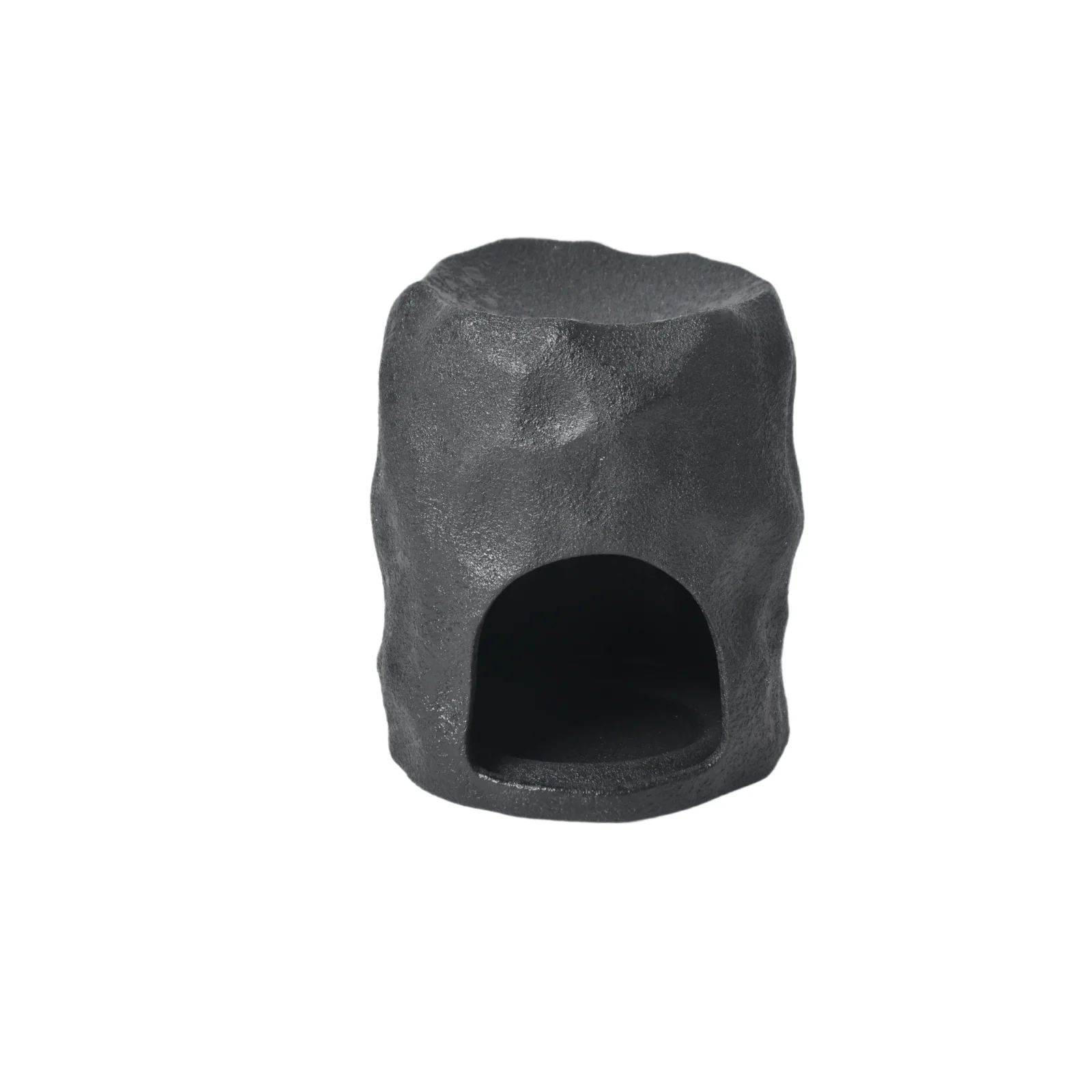
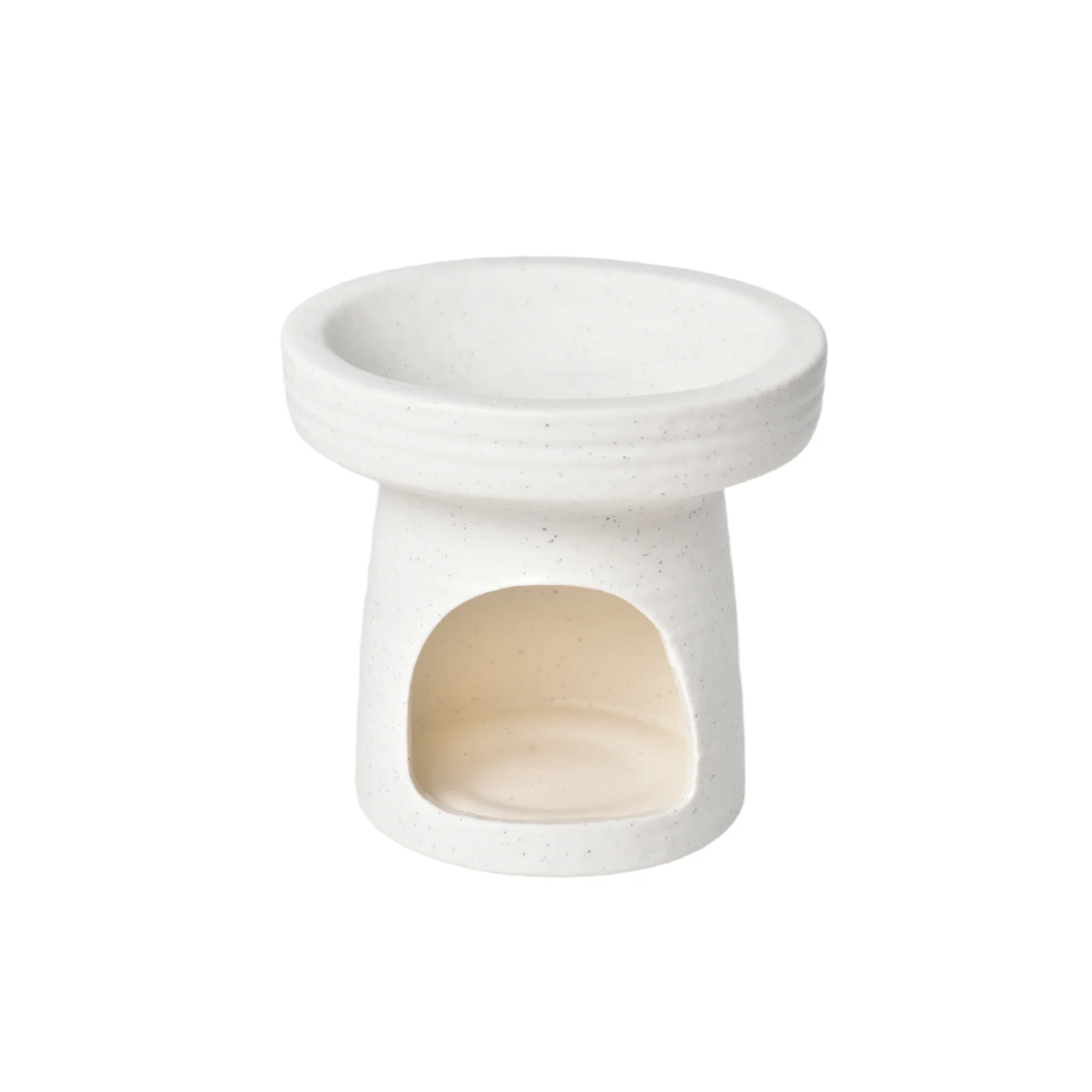
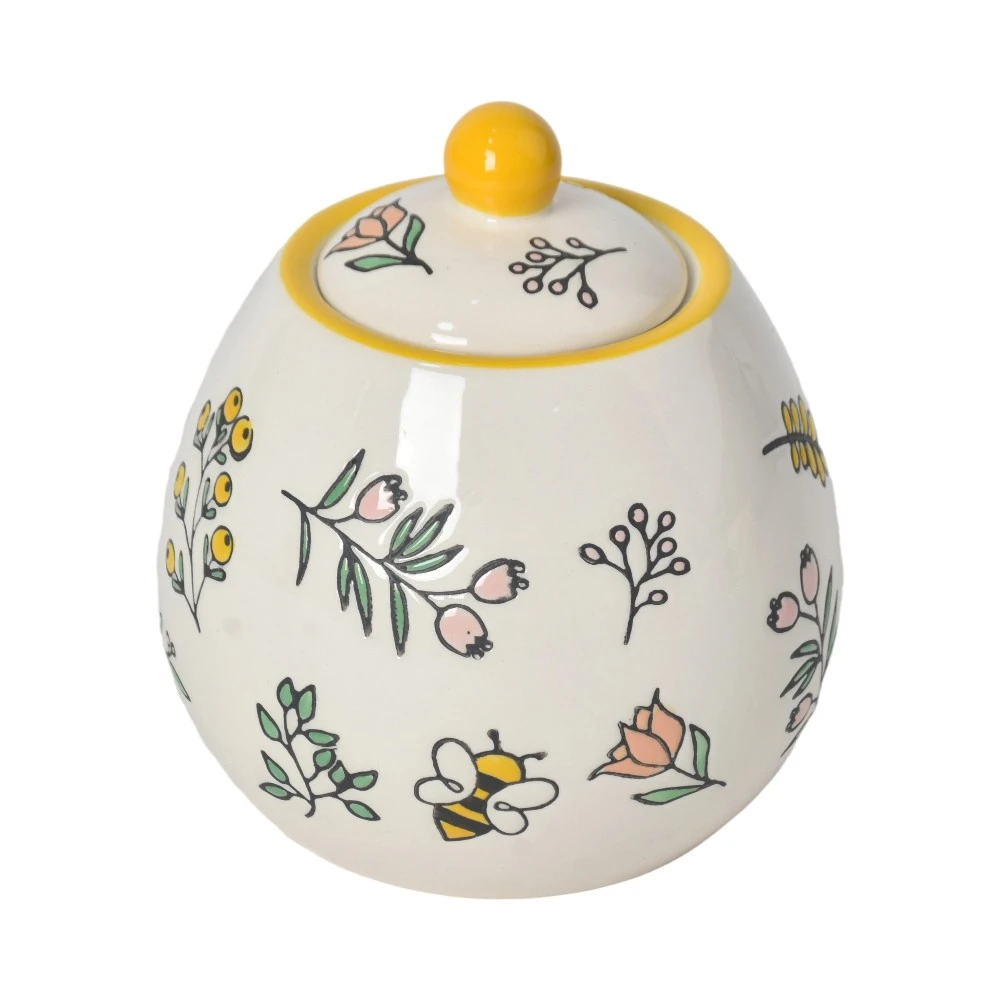
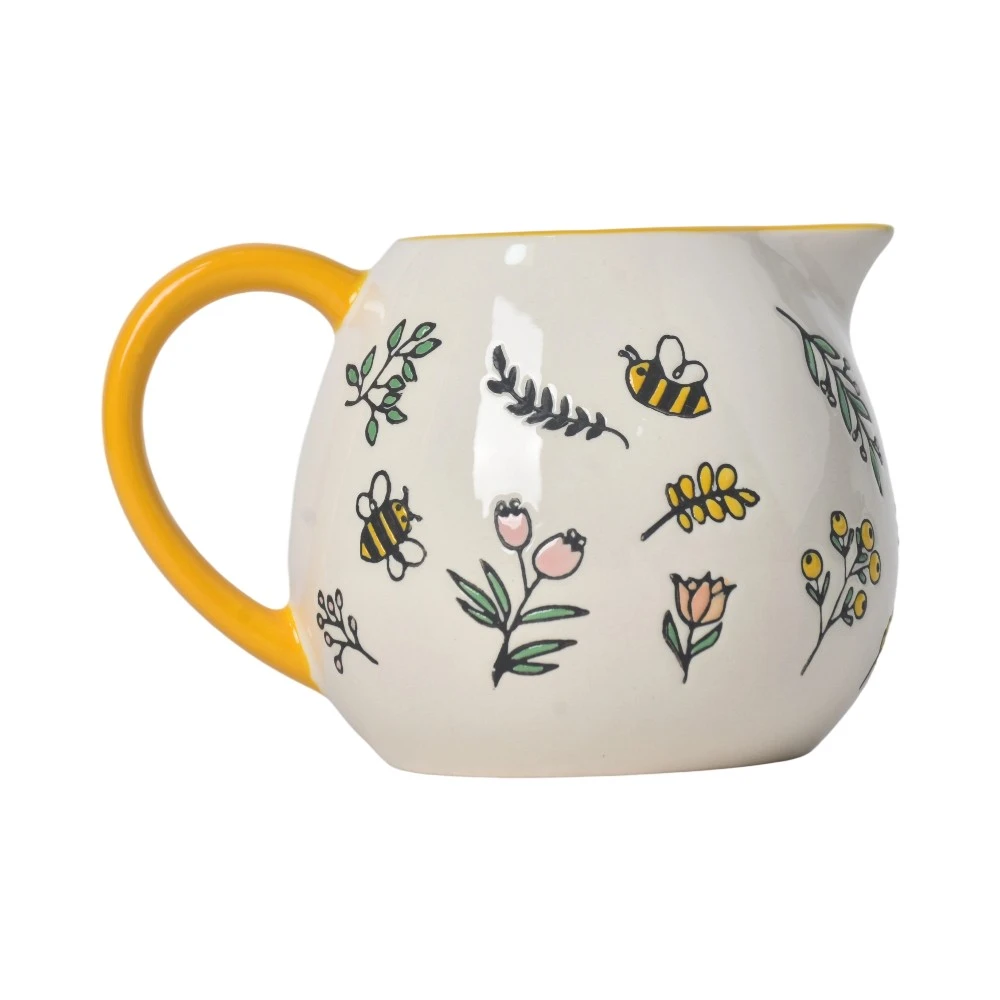
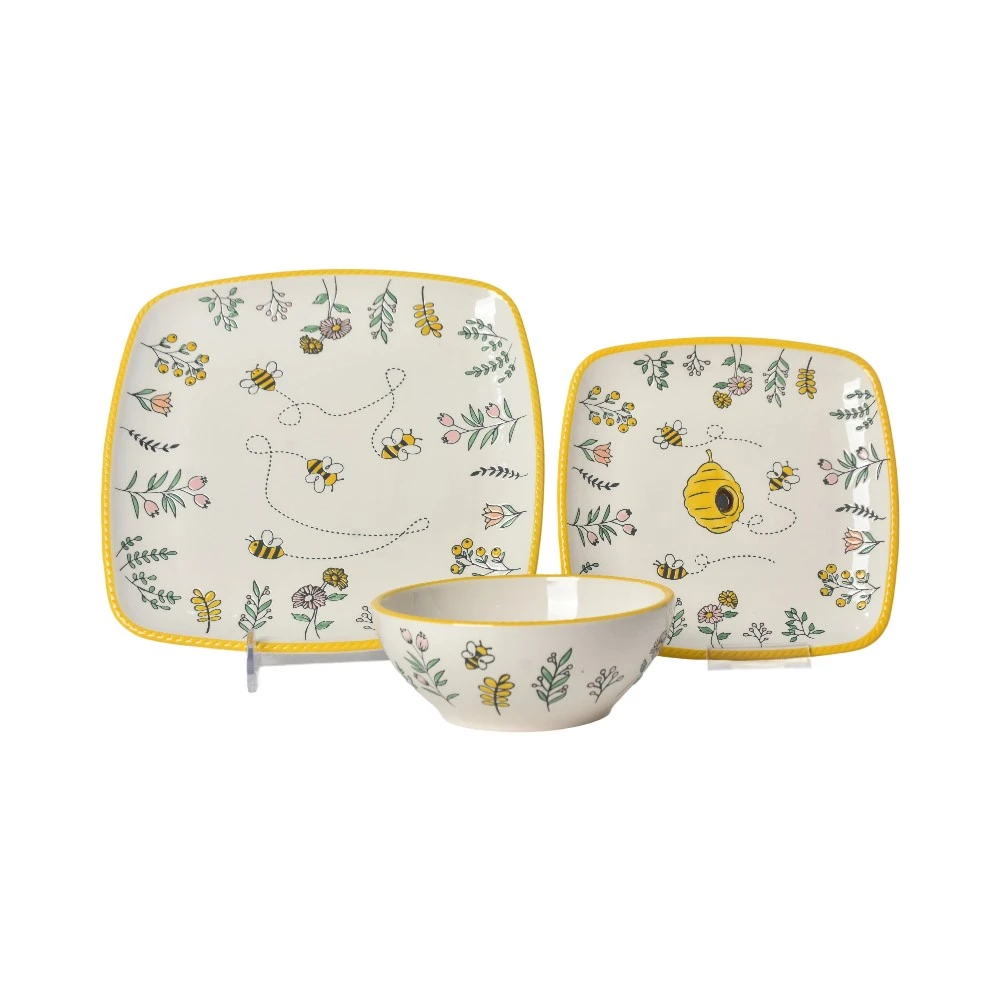
Louça de cerâmica de marca própria ajuda a Amazon, os fornecedores hoteleiros e as marcas de artigos para o lar a lançarem mais rapidamente louças com a sua marca, recorrendo a produtos de cerâmica de qualidade comprovada com logótipos personalizados, cores, caixas de presente e embalagens — sem terem de arcar com o custo total e o risco associados ao desenvolvimento de novos produtos.
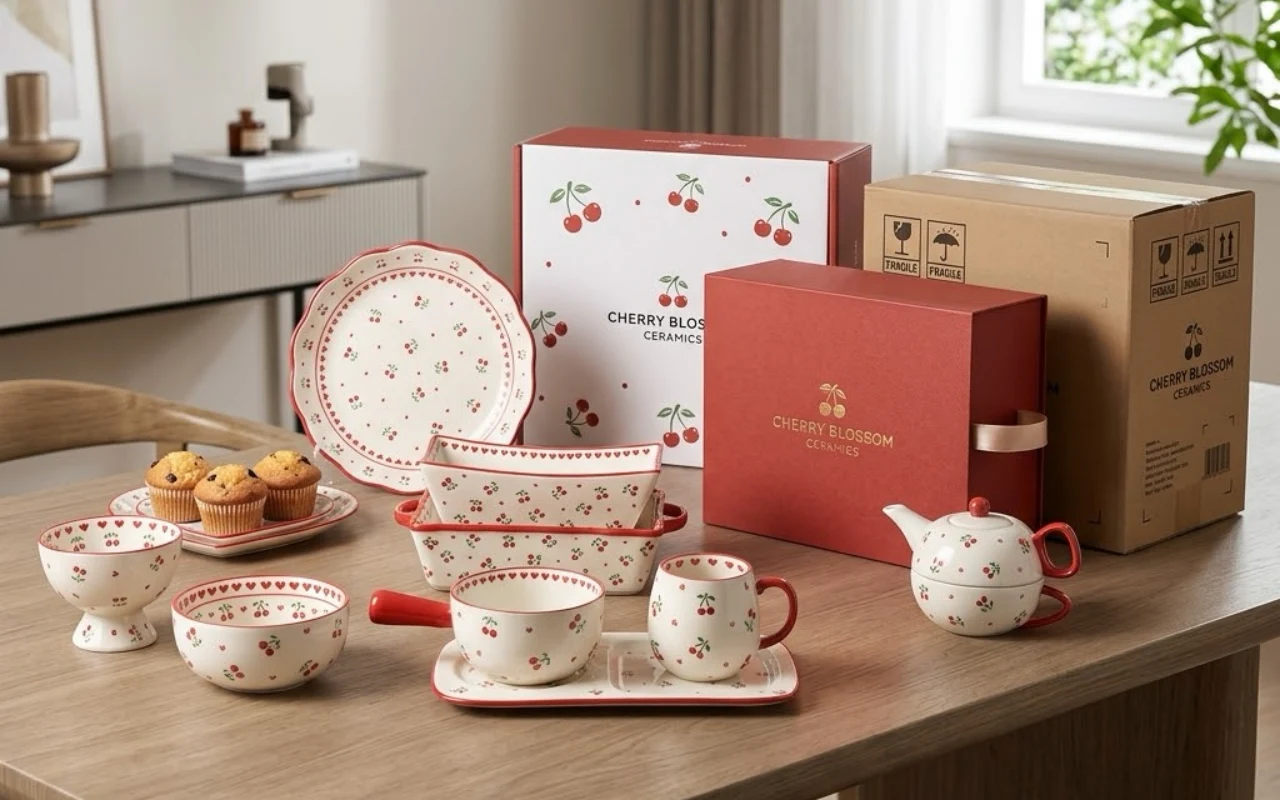
Para as marcas B2B, lançar uma coleção de louça de cerâmica nem sempre significa conceber produtos a partir do zero ou desenvolver novos moldes. O verdadeiro desafio é, muitas vezes, como transformar produtos cerâmicos de comprovada qualidade em produtos de marca, controlando simultaneamente os custos de desenvolvimento, os prazos de execução e o risco de mercado.
É aí que louça de cerâmica de marca própria torna-se uma solução prática.
Em vez de começarem por desenvolver produtos totalmente novos, as marcas podem optar por formas cerâmicas já comprovadas e diferenciá-las através de impressão de logótipos, cores personalizadas, caixa de presente e embalagem. Esta abordagem é particularmente adequada para marcas da Amazon, marcas de produtos para hotelaria e marcas de artigos para o lar e estilo de vida que pretendam testar novos produtos, expandir as suas linhas de produtos ou entrar no mercado de louça de cerâmica com um risco inicial de desenvolvimento mais reduzido.
O que é a louça de cerâmica de marca própria?
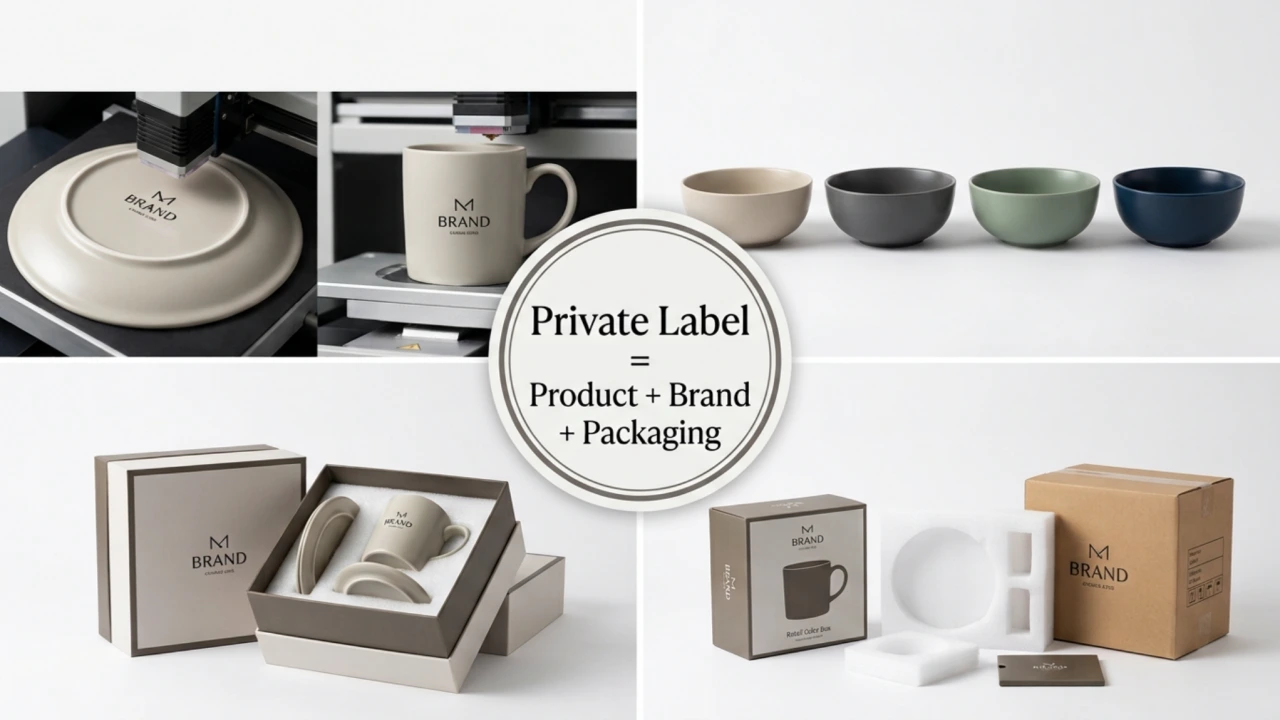
Louça de cerâmica de marca própria significa que um fabricante de cerâmica produz um produto já existente ou comprovado, enquanto a marca o comercializa sob a sua própria marca, identidade visual, embalagem e sistema de branding.
Em termos simples:
O fabricante produz o produto; a sua marca é responsável pela identidade que o cliente vê.
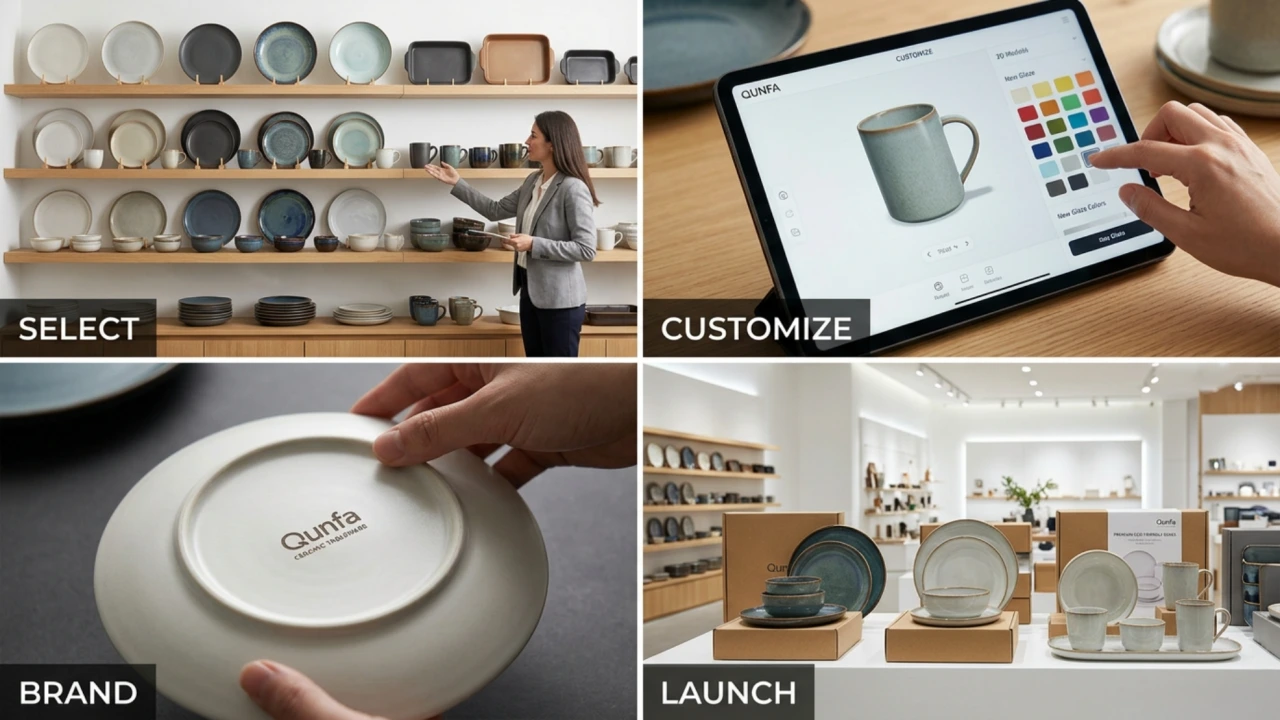
Por exemplo, uma marca de artigos para o lar da Amazon pode escolher um prato, uma taça ou uma caneca de cerâmica já existente de um fabricante e, em seguida, adicionar o seu próprio logótipo, as cores da marca, uma caixa de presente e a embalagem.
A marca própria é, portanto, mais do que simplesmente colocar um logótipo num produto de cerâmica.
Um projeto de marca própria com valor comercial envolve normalmente quatro elementos-chave:
- Seleção de produtos — escolher formatos comprovados e adequados ao mercado-alvo
- Decoração da marca — logótipo, cores, padrões e acabamentos de superfície
- Embalagem — caixas de presente, caixas de retalho, encartes e embalagens de envio
- Estratégia da linha de produtos — desenvolver uma coleção coordenada em vez de um único SKU
Isto faz com que a marca própria seja melhor compreendida como uma estratégia de produto da marca, em vez de ser apenas um método de fabrico.
Por que escolher a marca própria para uma marca de cerâmica?
Para as marcas que entram pela primeira vez no segmento da cerâmica, o maior risco nem sempre é a própria produção. É investir fortemente no desenvolvimento de produtos antes de a procura do mercado ter sido validada.
O desenvolvimento de um produto cerâmico totalmente novo pode envolver a conceção do produto, a criação de protótipos, o desenvolvimento de moldes, testes de cozedura, o ajuste do esmalte e a validação da produção.
Em comparação, louça de cerâmica de marca própria permite que as marcas comecem com produtos comprovados e testem primeiro a procura do mercado.
Entrada mais rápida no mercado
A utilização de formas cerâmicas já estabelecidas pode reduzir várias etapas da fase inicial do desenvolvimento.
As marcas podem investir mais recursos em:
- Posicionamento do produto
- Identidade da marca
- Anúncios na Amazon
- Fotografia de produtos
- Design de embalagens
- Marketing
Isto é particularmente valioso para as marcas da Amazon que precisam de testar novos produtos rapidamente.
Menor risco de desenvolvimento
Os produtos cerâmicos são mais complexos do que os bens de consumo comuns com impressão.
A alteração da forma de um produto cerâmico pode afetar:
- Peso do produto
- Estabilidade de conformação
- Encolhimento por cozedura
- Empilhabilidade
- Dimensões da embalagem
- Custos de envio
- Taxas de quebra
Para quem compra cerâmica pela primeira vez, uma estratégia mais prática é:
Comece com um produto comprovado, avalie a procura e, em seguida, invista num desenvolvimento mais aprofundado do produto.
Esta é uma das principais diferenças comerciais entre a marca própria e o desenvolvimento de produtos totalmente personalizados.
Expansão mais fácil do SKU
Assim que um produto atingir um volume de vendas estável, as marcas podem criar SKUs adicionais com base na mesma linguagem de design.
Por exemplo:
Prato de jantar → Prato de acompanhamento → Tigela → Caneca → Prato de servir
Esta abordagem permite que uma marca, gradualmente, desenvolver uma coleção completa de louça de mesa em vez de começar cada novo produto do zero.
O que é possível personalizar num projeto de louça de marca própria?
O objetivo da marca própria não é, necessariamente, redesenhar o produto na íntegra. Trata-se de criar uma diferenciação da marca em torno de um produto cerâmico de comprovada qualidade.
1. Impressão de logótipos
Um logótipo é uma das formas mais diretas de criar reconhecimento da marca.
Dependendo da estrutura do produto e do processo de decoração, é possível aplicar um logótipo em:
- Fundos das placas
- Fundos de taças
- Corpos de canecas
- Fundos de copo
- Embalagem do produto
No entanto, os compradores B2B não devem limitar-se a perguntar:
“Pode imprimir o meu logótipo?”
Devem também confirmar:
- Tamanho do logótipo
- Posição do logótipo
- Número de cores
- Complexidade da obra de arte
- Cor final após a cozedura
- Consistência entre lotes
- Quantidade mínima de encomenda
- Processo de amostragem
Análise exclusiva sobre o abastecimento: Se uma marca pretender comercializar a mesma coleção de louça a longo prazo, é aconselhável estabelecer uma posição consistente do logótipo e regras visuais já no primeiro projeto de marca própria. Isto facilita a futura expansão do catálogo de artigos, mantendo ao mesmo tempo uma identidade de marca consistente.
2. Cor personalizada
Para as marcas de artigos para o lar e de estilo de vida, a cor pode ser ainda mais importante do que o logótipo na criação do reconhecimento do produto.
Por exemplo, uma marca poderia criar uma coleção coordenada em torno de uma paleta de cores:
- Pratos de jantar em tom de branco sujo
- Taças verde-salva
- Canecas de um azul profundo
- Caixas de presente a condizer
No entanto, as cores cerâmicas não podem ser reproduzidas simplesmente a partir de um valor RGB no ecrã de um computador.
Após a cozedura, a cor final pode ser influenciada por:
- Matérias-primas
- Formulação do esmalte
- Temperatura de queima
- Atmosfera do forno
- Espessura do produto
Por conseguinte, A cor personalizada deve ser confirmada através de amostras físicas e testes de cozedura, em vez de se basear apenas em valores de cor digitais.
Um processo prático consiste em:
Referência de cor da marca → Amostra → Cozedura → Aprovação da cor → Produção em série
Este é também um aspeto importante a ter em conta ao desenvolver loiça de cerâmica personalizada.
3. Caixa de presente
Para as marcas da Amazon, marcas de presentes e marcas de artigos para o lar de gama alta, uma caixa de presente pode ajudar a transformar louça comum num produto de marca mais completo.
As configurações possíveis incluem:
- Caixa de presente com uma caneca
- Caixa de presente com chávena e pires
- Conjunto de 2 peças
- Conjunto de 4 peças
- Conjunto de 6 peças
- Conjunto de presentes sazonal
O design das caixas de presente não deve centrar-se apenas na aparência. Tem também de estar em conformidade com as dimensões dos produtos de cerâmica, a estrutura de proteção interna e as condições de envio.
Uma caixa de presente de grandes dimensões pode aumentar os custos de armazenamento e transporte, enquanto uma proteção interna insuficiente pode aumentar o risco de quebra.
Por conseguinte, O design da caixa de presente deve ser tido em conta durante o desenvolvimento do produto, e não depois de a produção em série já ter começado.
4. Embalagem personalizada
A embalagem é uma das vertentes mais subestimadas de um projeto de marca própria.
Um sistema completo de embalagem com a marca pode incluir:
- Logótipo da marca
- Embalagem de retalho
- Rótulo do produto
- Código de barras
- Instruções
- História da marca
- Inserções de proteção
- Caixas-mãe
- Etiquetas de envio
No caso das marcas da Amazon, as dimensões das embalagens também devem ser consideradas do ponto de vista do armazenamento e da execução de encomendas.
Análise exclusiva sobre o abastecimento: O custo das embalagens de cerâmica não deve ser avaliado apenas perguntando quanto custa cada caixa de retalho. Os compradores devem ter em conta o custo total do produto, incluindo a embalagem, a eficiência logística e eventuais danos. Uma inserção protetora de melhor qualidade pode aumentar o custo da embalagem, ao mesmo tempo que reduz o custo global por unidade vendável.
A marca própria não é o mesmo que ODM
Muitos compradores confundem a marca própria com o ODM, mas estes conceitos respondem a questões diferentes.
O que é que a marca própria resolve?
A Private Label responde principalmente a:
“Como posso transformar um produto já consagrado num produto da minha marca?”
O seu foco centra-se em:
- Imagem de marca
- Logótipo
- Cor
- Embalagem
- Caixas de presente
- Gama de produtos
O que é que o ODM resolve?
A ODM responde principalmente a:
“Quem é responsável pela conceção e desenvolvimento do produto?”
ODM significa que o fabricante dispõe de capacidades de conceção, desenvolvimento e fabrico de produtos e pode fornecer soluções de produto com base na sua própria conceção e experiência técnica.
Portanto:
O ODM descreve um modelo de desenvolvimento e fabrico de produtos, enquanto a marca própria descreve a forma como uma marca comercializa e identifica um produto.
Ambos podem existir ao mesmo tempo.
Por exemplo, a Qunfa pode desenvolver um modelo de prato de cerâmica já comprovado. Uma marca da Amazon pode selecionar o produto e adicionar o seu próprio logótipo, cor e embalagem.
Do ponto de vista da marca, trata-se de:
Produto de marca própria
Se a conceção e o desenvolvimento do produto tiverem sido assegurados pela Qunfa, também poderá ser considerado um:
Produto ODM
Então, ODM não significa apenas «marca própria». Descrevem diferentes aspetos da mesma relação de produto B2B.
Louça de cerâmica de marca própria vs. louça de cerâmica personalizada
Se uma marca pretender uma diferenciação mais acentuada dos seus produtos, pode considerar loiça de cerâmica personalizada.
| Característica | Marca própria | Louça de cerâmica personalizada |
|---|---|---|
| Formatos de produto comprovados | ✓ | Opcional |
| Logótipo | ✓ | ✓ |
| Cor personalizada | ✓ | ✓ |
| Caixa de presente | ✓ | ✓ |
| Embalagem | ✓ | ✓ |
| Novo formato do produto | Normalmente não é necessário | ✓ |
| Evolução do tamanho | Limitada | ✓ |
| Desenvolvimento de bolor | Normalmente não é necessário | Pode ser necessário |
| Custo de desenvolvimento | Relativamente mais baixo | Relativamente mais elevado |
| Tempo de lançamento no mercado | Mais rápido | Mais lento |
| Diferenciação do produto | Moderado | Elevado |
Nenhuma das duas abordagens é, por si só, melhor.
A escolha certa depende da fase em que a marca se encontra atualmente.
Quando é que uma marca deve optar por uma marca própria?
A marca própria é a melhor opção quando:
- A vossa marca é uma nova marca da Amazon que está a entrar na categoria da cerâmica
- Queres testar o mercado rapidamente
- Ainda não dispõe de dados de vendas fiáveis
- Quer controlar os custos iniciais de desenvolvimento
- A vossa diferenciação deve-se principalmente à marca e à embalagem
- É necessário aumentar rapidamente o número de SKUs
- Quer reduzir o risco associado ao desenvolvimento de novos produtos
A louça de cerâmica personalizada é melhor quando:
- Já tem vendas estáveis
- Compreende claramente os seus clientes-alvo
- O mercado exige um produto diferenciado
- Os concorrentes podem copiar facilmente as formas existentes
- A sua marca precisa de uma diferenciação de produto mais forte a longo prazo
- Pode aceitar um ciclo de desenvolvimento mais longo
- Está disposto a investir em ferramentas e no desenvolvimento de produtos
Por isso, uma marca já consolidada não precisa, necessariamente, começar com produtos totalmente personalizados desde o primeiro dia.
Uma estratégia prática de marca própria para a Amazon, hotéis e marcas de produtos para o lar
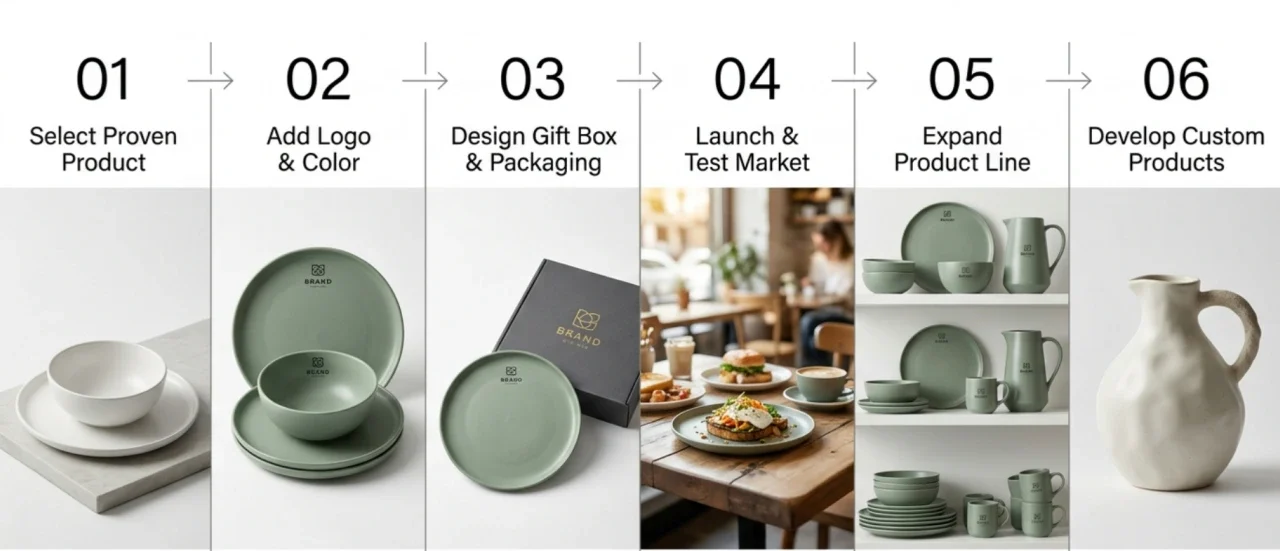
Para marcas B2B, recomendamos um “Validar primeiro, personalizar mais a fundo mais tarde” estratégia de desenvolvimento de produtos.
Fase 1: Escolher um produto de comprovada qualidade
Comece por selecionar um produto cerâmico de alta qualidade da gama existente do fabricante.
Os principais fatores a avaliar incluem:
- Forma
- Dimensões
- Peso
- Utilização prevista
- Empilhabilidade
- Gama de produtos
Nesta fase, o objetivo não é tornar o produto o mais exclusivo possível.
A questão fundamental é:
Este produto tem potencial de mercado?
Fase 2: Criar a identidade da marca
Depois de selecionar o produto, adicione:
- Logótipo
- Cor personalizada
- Caixa de presente
- Embalagem
Isto transforma um produto cerâmico comum num produto comercial de marca.
Fase 3: Alargar a linha de produtos
Assim que o SKU principal tiver sido validado, adicione produtos complementares que sigam a mesma linha de design.
Por exemplo:
Prato de base → Taça → Caneca → Louça de servir
Isto contribui para uma coleção da marca mais completa.
Fase 4: Desenvolver produtos personalizados
Assim que a marca atingir um volume de vendas estável, considere desenvolver produtos exclusivos loiça de cerâmica personalizada.
Nesta fase, a personalização já não se resume simplesmente a dar um aspeto diferente a um produto. Pelo contrário:
Utilizar dados validados pelo mercado para orientar um desenvolvimento de produtos mais aprofundado.
Por exemplo, o desempenho das vendas e o feedback dos clientes podem ajudar a determinar:
- Que tamanho deve ser ajustado?
- Qual é a capacidade mais popular?
- Que cor deve ser destacada?
- Qual é a forma do produto que merece um maior desenvolvimento?
Esta abordagem é mais adequada para o desenvolvimento de marcas B2B a longo prazo do que basear-se inteiramente em pressupostos de design.
Como escolher um fabricante de louça de cerâmica de marca própria?
O preço não deve ser o único fator a ter em conta na escolha de um fornecedor.
No âmbito de um programa de produtos de marca a longo prazo, os compradores B2B devem avaliar as seguintes áreas.
Capacidade de produção
Capacidade de produção estável determina se um fornecedor pode assegurar o reabastecimento contínuo.
Isto é particularmente importante para as marcas da Amazon. Se um produto se tornar subitamente um sucesso de vendas, a capacidade do fornecedor para manter a produção e a reposição pode afetar diretamente os níveis de stock e as vendas.
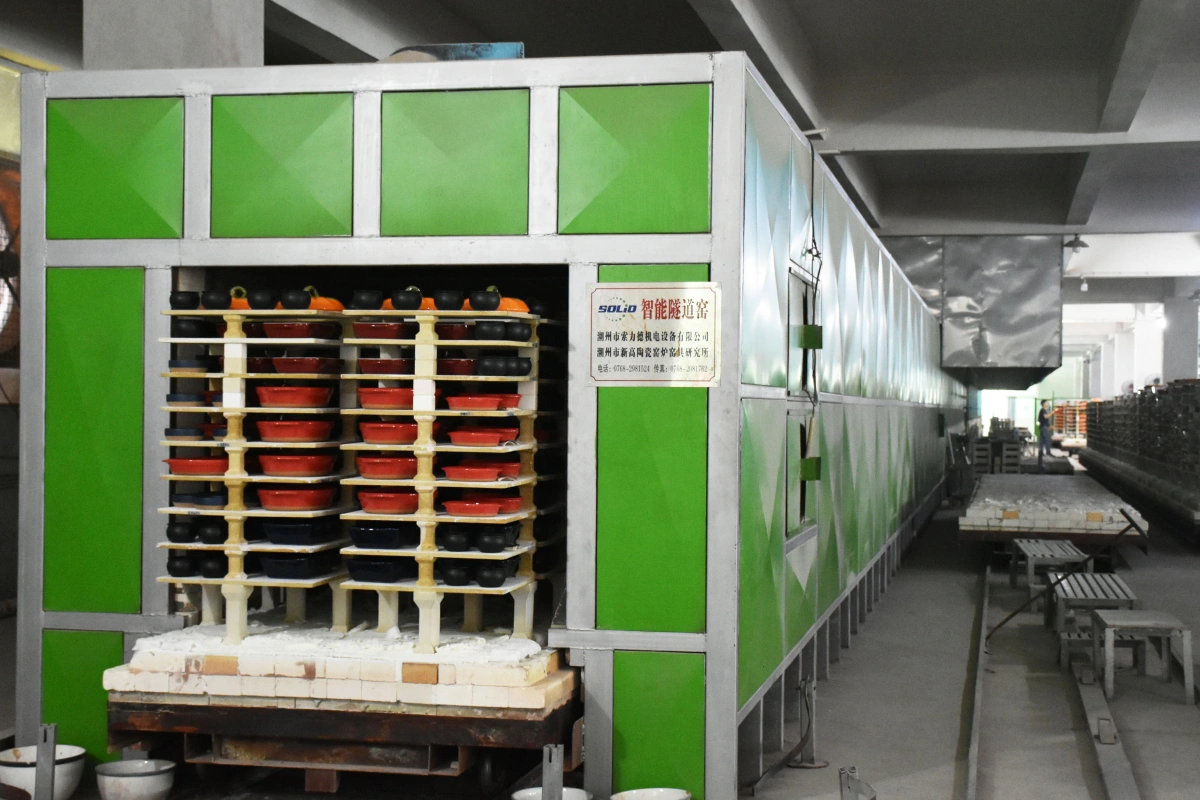
Tecnologia de Materiais e Produção
Os diferentes materiais cerâmicos e processos de produção podem afetar a aparência, o desempenho e a consistência da produção do produto.
A Qunfa Ceramics utiliza um sistema de produção de cerâmica de temperatura média. Os compradores devem avaliar se o material e o processo de produção são adequados ao seu mercado-alvo e à aplicação do produto, em vez de compararem os fornecedores com base apenas no preço unitário.
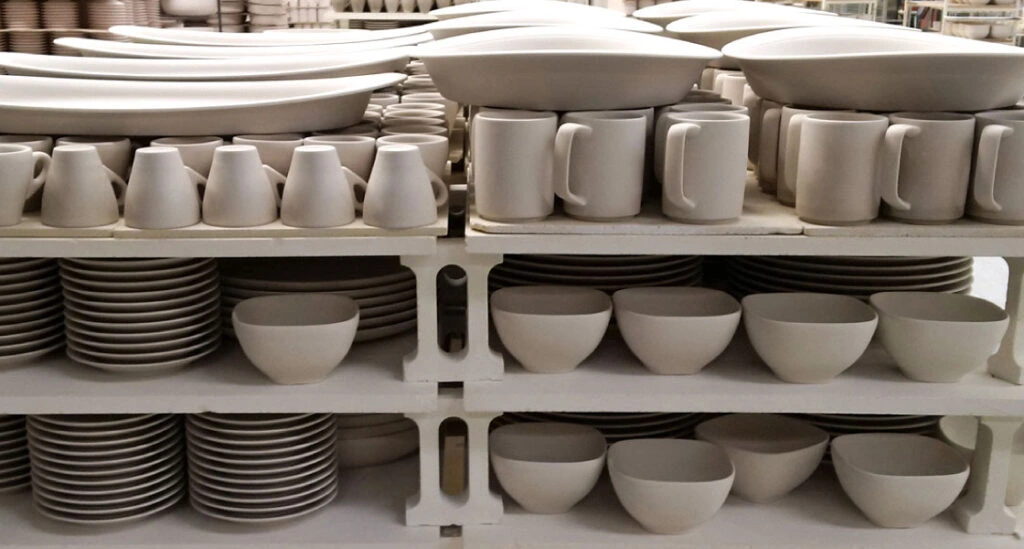
Controlo de qualidade
Um fabricante experiente de cerâmica deve controlar o processo de produção de forma sistemática, incluindo:
Matéria-prima → Moldagem → Secagem → Esmaltagem → Cozedura → Decoração → Inspeção → Embalagem
Os compradores B2B devem também perguntar como é que o fabricante controla:
- Variação dimensional
- Diferenças de cor
- Urdida
- Defeitos superficiais
- Fissuras
- Danos na embalagem
Capacidade OEM/ODM
Se uma marca pretender passar da marca própria para loiça de cerâmica personalizada No futuro, as capacidades OEM/ODM do fornecedor tornar-se-ão cada vez mais importantes.
Uma parceria ideal pode desenvolver-se gradualmente:
Produtos comprovados → Validação de mercado → Expansão da linha de produtos → Desenvolvimento mais aprofundado do produto
Isto permite ao fabricante apoiar a marca em diferentes fases de crescimento.
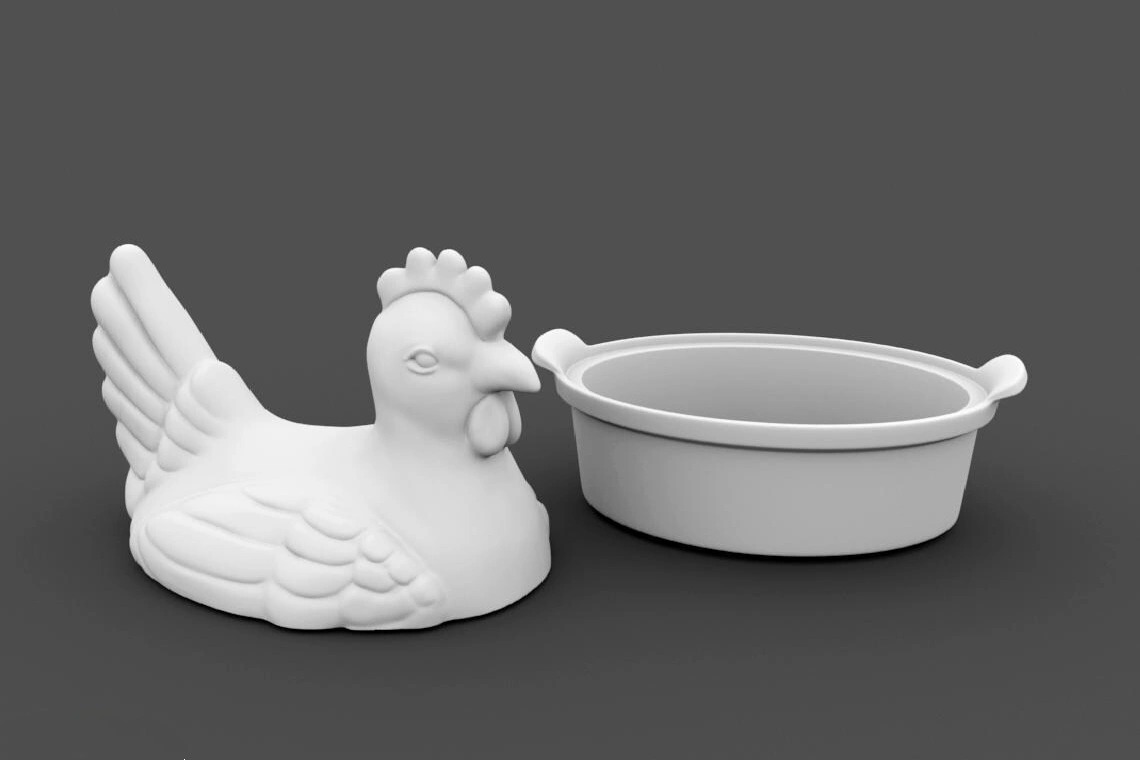
Crie a sua linha de louça de mesa de marca própria com a Qunfa
Fundada em 1993, Cerâmica Qunfa é um fabricante experiente de cerâmica, com instalações de produção de 30 000 m² e mais de 400 colaboradores. Somos especializados em louça de mesa e utensílios de cozinha em cerâmica, com linhas de produtos adicionais para animais de estimação e jardinagem.
Fornecemos marcas globais, incluindo Walmart, Costco, Aldi, Disney, C&B e Michaels, e prestamos apoio Projetos OEM/ODM e de marca própria.
Para as marcas da Amazon, de hotéis e de produtos para o lar, oferecemos impressão de logótipos, cores personalizadas, caixas de presente e embalagens com a marca. Comece com produtos de sucesso comprovado, construa a sua marca e amplie a sua coleção à medida que a procura cresce.