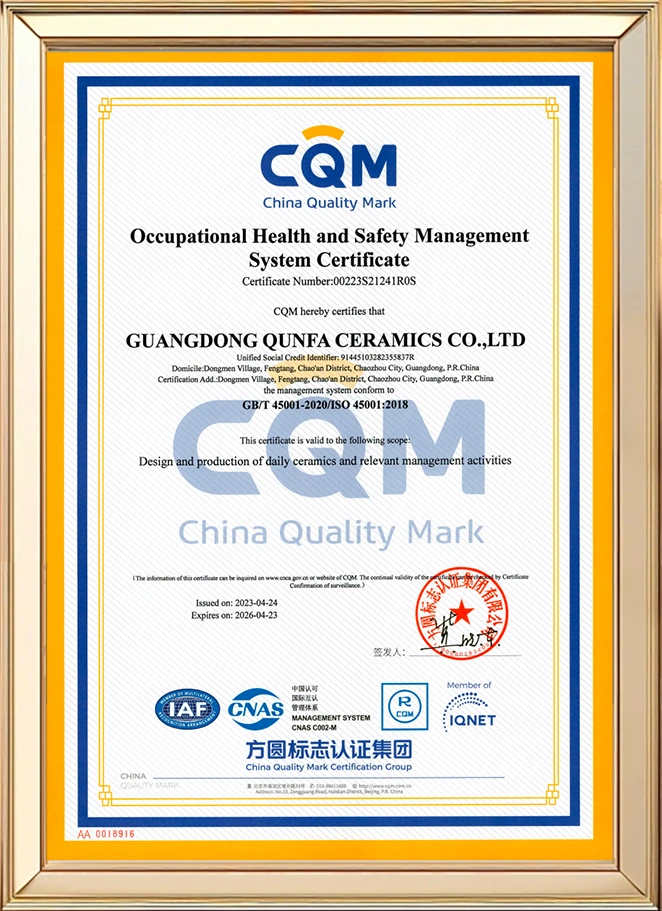
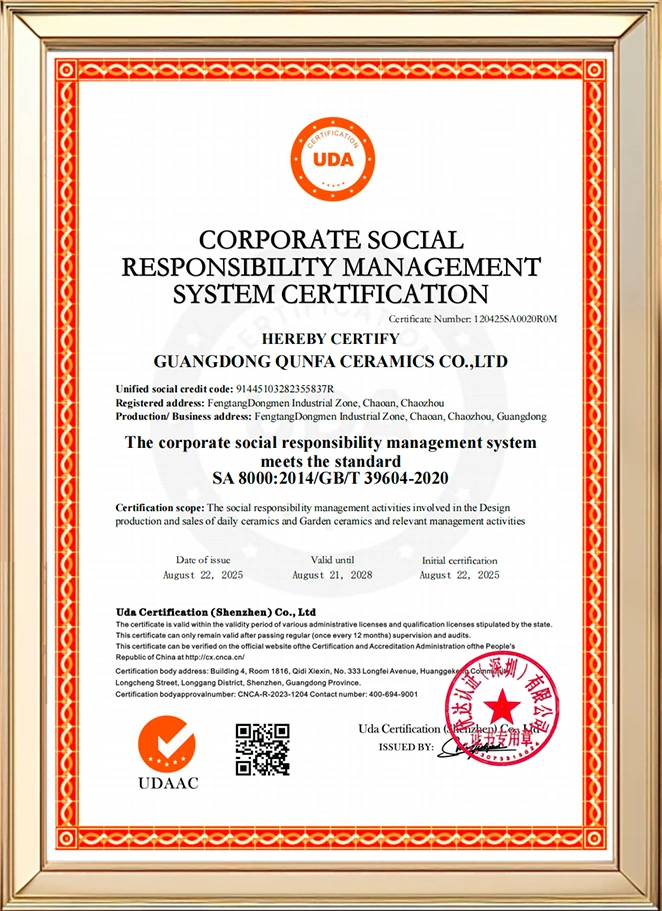
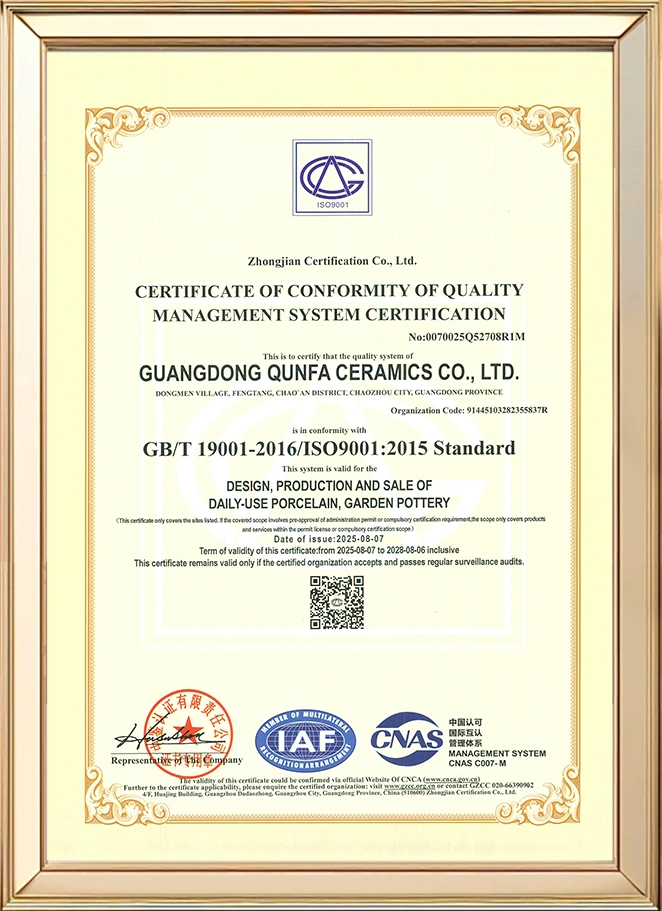
を選ぶ際には ceramic tableware supplier, you should not simply look for labels like “FDA,” “LFGB,” or “SGS.” Instead, you must verify the actual test reports covering food contact safety, lead and cadmium migration, and suitability for microwave and dishwasher use, while confirming their applicability to the specific products and target markets.

For importers, wholesalers, retailers, and foodservice buyers, simply asking “Do you have certificates?” is only the first step. What truly matters is confirming the following: Do the products meet the food contact requirements of the target market? Have the glazes and decorations undergone safety testing? Are the products genuinely microwave-safe and dishwasher-safe? Can the supplier provide test reports corresponding to the specific SKUs?

This is a point easily overlooked when sourcing ceramic tableware: A supplier holding a certificate does not mean that all their ceramic products automatically comply with the requirements of every market.

Therefore, when seeking a long-term ceramic tableware supplier, it is advisable to evaluate them across four dimensions: market regulations, product testing, factory quality control, and usage performance.

What Certifications and Tests Should a Ceramic Tableware Supplier Have?

Regulatory requirements vary across different countries and markets. A professional ceramic tableware supplier should be able to provide the appropriate compliance documentation and testing support based on the client’s sales market.

Common sourcing requirements include:

  • FDA food contact requirements
  • LFGB food contact testing
  • Test reports from third-party laboratories (e.g., SGS)
  • Lead & cadmium migration testing
  • Microwave safety testing
  • Dishwasher safety testing
  • Tests related to product materials and glazes
  • Other compliance documents required by the target market

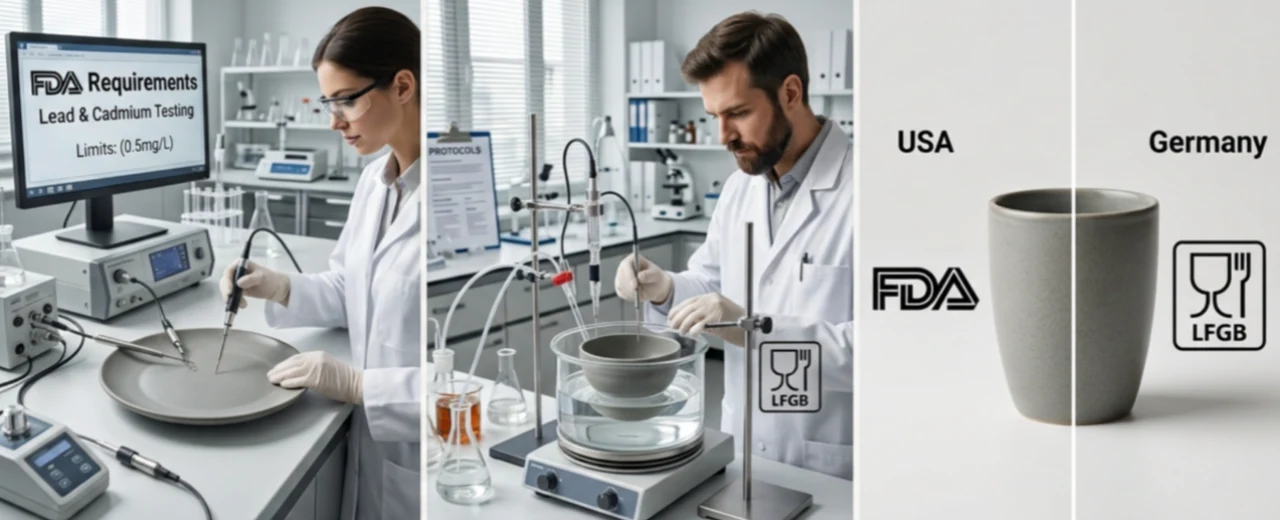
It is important to clarify that FDA and LFGB are not “universal global ceramic certifications” in the simple sense; rather, they represent regulations and food contact safety standards for specific markets. SGS, on the other hand, is a third-party testing and certification service provider.

This distinction is crucial for B2B procurement.


1. FDA: Important for the U.S. Ceramic Tableware Market

If the products are intended for the U.S. market, FDA requirements are a key focus for buyers.

The U.S. FDA has established clear regulations and action levels regarding issues such as lead and cadmium migration in ceramicware intended for food contact. FDA data indicates that different types of ceramicware are subject to different action levels for lead migration; for instance, requirements differ for products such as flat plates, cups, and bowls.

This means buyers cannot simply ask a supplier for a generic “FDA Certificate” and assume the entire product line complies with U.S. market requirements.

A more professional approach is to ask the following questions:

What should buyers ask for?

  • Is the product intended for food contact?
  • Have lead and cadmium migration tests been conducted?
  • Do the tested samples match the actual SKUs being purchased?
  • Does the test report include details on product models, colors, or decorations?
  • Does the testing laboratory hold the appropriate accreditations?
  • Do the test results meet the requirements of the target market?

FDA guidelines also place special emphasis on the ceramic production process, specifically regarding glazes, decals, pigments, firing conditions, and finished product testing.

Exclusive Sourcing Tip:
For tableware featuring rich colors or extensive overglaze decoration, do not simply request a single report for the “entire product set.” A safer approach is to have the ceramic tableware supplier clearly specify which colors, patterns, and decorative techniques are covered by the testing, as different decorative schemes for the same product may involve different material systems.


2. LFGB: A Key Requirement for German and European Buyers

If your target market includes Germany, buyers will often require LFGB-related testing.

The LFGB is part of the German regulatory framework for food, consumer goods, and animal feed; for food-contact materials, the focus is on whether they compromise food safety under actual conditions of use.

When sourcing ceramic tableware, LFGB testing requirements must be assessed based on the specific product, materials, and usage conditions, rather than assuming that an “LFGB certificate” automatically permits sales across the entire European market.

What should a ceramic tableware supplier provide?

A professional supplier should be able to provide the following based on the specific product:

  • Food-contact material testing;
  • Glaze-related testing;
  • Heavy metal migration testing;
  • Product-specific test reports;
  • Compliance documentation tailored to the client’s market requirements.

There is a crucial distinction to be made here regarding sourcing logic:

FDA and LFGB regulations focus on legal compliance and food-contact safety, whereas “Microwave Safe” and “Dishwasher Safe” ratings relate primarily to product performance and durability.

Therefore, buyers should avoid asking suppliers for a single “all-purpose certificate” and instead require a comprehensive compliance documentation package.

FDA and LFGB food contact testing for ceramic tableware-1

3. SGS: Why Third-Party Testing Matters

Many buyers use “SGS” as a specific filter criterion when searching for ceramic tableware suppliers.

This is a sensible approach, provided one correctly understands the role of SGS.

SGS provides third-party testing, inspection, and certification services. For ceramic tableware, buyers can request test reports issued by accredited third-party laboratories, rather than relying solely on self-declared test statements from the supplier.

The value of third-party testing lies in:

  • Reducing information asymmetry associated with supplier self-declarations;
  • Providing importers with traceable test records;
  • Facilitating supplier comparisons;
  • Providing documentation to support compliance audits for different markets.

The report matters more than the logo

In B2B procurement, a truly valuable SGS test report must correspond directly to the specific product in question.

When purchasing, it is advisable to verify the following details:

Product → Model → Color/Decoration → Material → Test Standard → Test Result → Test Date

If the product listed in the report differs significantly from the actual product being purchased, risks remain—even if the supplier possesses an “SGS report”—as the report does not necessarily confirm the compliance of the specific item in question.

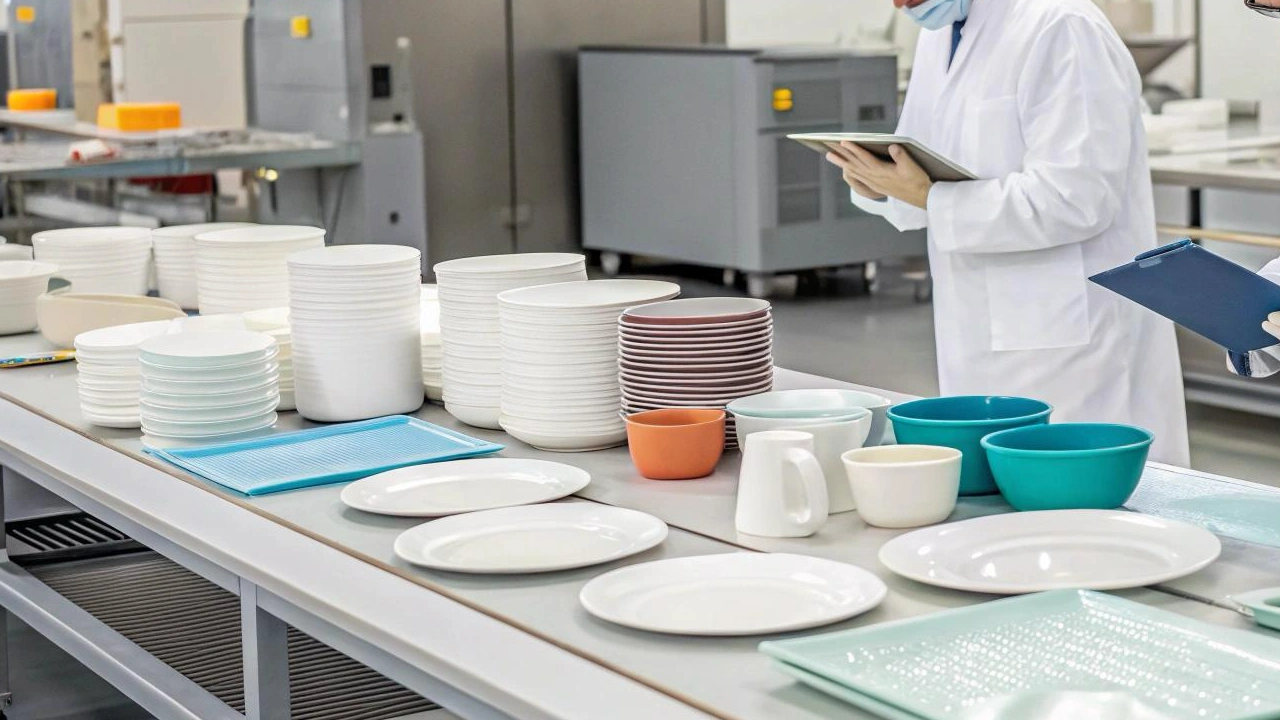
certifications-ceramic-tableware-supplier-1

4. Dishwasher Safe: A Performance Claim Buyers Should Verify

Dishwasher Safe” should not be treated merely as a marketing label.

Dishwasher environments involve:

  • High-temperature water flow;
  • Detergents;
  • Prolonged wash cycles;
  • Mechanical impact;
  • Repeated thermal cycling (hot and cold fluctuations).

Therefore, a ceramic tableware supplier truly capable of supporting long-term commercial sales should prioritize glaze durability and the stability of decorations.

Buyers should pay particular attention to:

釉薬の耐久性

Is the glaze prone to losing its luster or finish?

Decoration Durability

Do the patterns fade after repeated washing?

Edge Durability

Are the rims of plates and the edges of cups prone to chipping?

Repeated-Cycle Performance

Do the product’s appearance and structural integrity remain stable after multiple dishwasher cycles?

Exclusive Sourcing Tip:
If the product is intended for hotels, restaurants, or frequent home use, do not simply ask, “Is it dishwasher safe?” Instead, ask a more specific question:

“What dishwasher-cycle testing has been performed on this specific product?”

This provides more valuable information for sourcing decisions than merely looking for a “Dishwasher Safe” label on the product page.


5. Microwave Safe: More Than Just a Label

For the European and North American consumer markets, “Microwave Safe” has become a key functional attribute for ceramic tableware.

However, determining whether ceramicware is suitable for microwave use requires considering the product’s material, glaze, decoration, and structural design.

Pay special attention to:

  • Metallic rim decorations;
  • Gold or silver accents;
  • Special metallic pigments;
  • Internal product defects;
  • Differences in thermal expansion between materials.
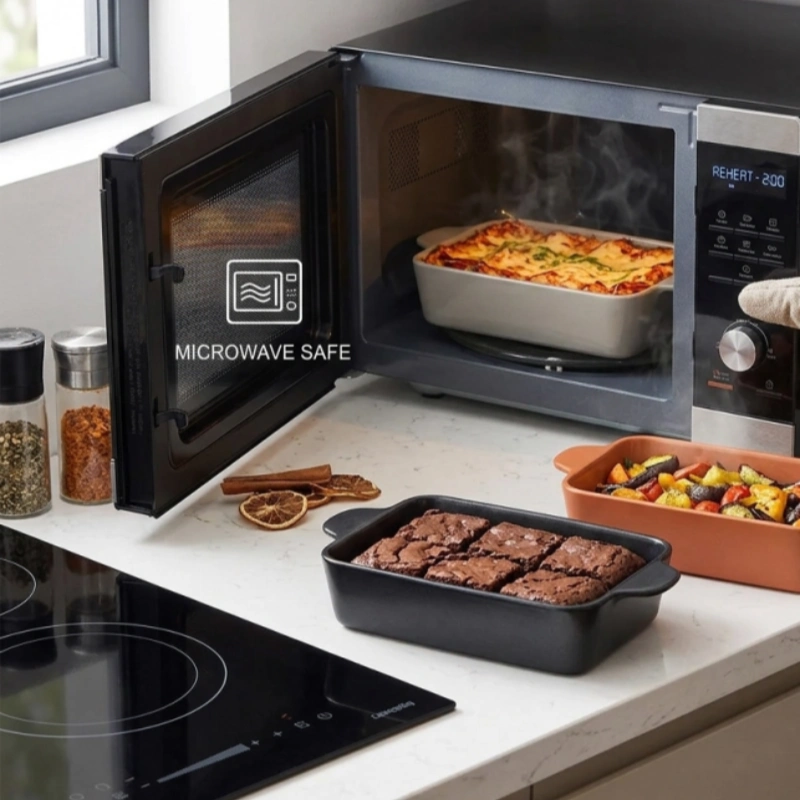
セラミック食器・電子レンジ対応・1

Therefore, if a brand intends to sell “Microwave Safe” ceramic tableware, it is recommended to ask the ceramic tableware supplier to provide relevant product test results or evidence of performance suitability.

Microwave Safe vs. Food Safety

This is a common misconception during the sourcing process.

A product meeting food-contact safety requirements does not automatically mean it is suitable for microwave use.

Conversely, the fact that a product can be used in a microwave does not automatically mean it complies with a specific country’s food-contact regulations.

Food safety, microwave suitability, and dishwasher suitability are three distinct criteria for assessment.


6. What Should Buyers Put in a Ceramic Tableware Compliance File?

For long-term sourcing projects, it is advisable to create an SKU-level compliance file for each product, rather than simply keeping a single certificate provided by the supplier. A practical documentation structure includes the following:

Document/InformationPurpose for Procurement
Product SpecificationConfirming materials and product parameters
FDA-related Test ReportUS market compliance review
LFGB-related Test ReportGerman/European market review
SGS/Third-Party ReportThird-party testing verification
Lead & Cadmium TestFood contact safety
Microwave Safe EvidenceMicrowave suitability
Dishwasher Safe EvidenceDishwasher suitability
Product PhotosVerifying the actual product
Decoration DetailsConfirming colors and decoration
Batch/QC RecordsMass production quality traceability

This documentation system is particularly important for brand clients, as it allows for the rapid identification of specific materials, colors, decorations, and production batches in the event of market spot checks, customer complaints, or product updates.


Why Partner with a Certified Ceramic Manufacturer

For B2B procurement, choosing a professional ceramic manufacturer makes it easier to establish a long-term, stable quality control system compared to simply selecting a trading supplier.

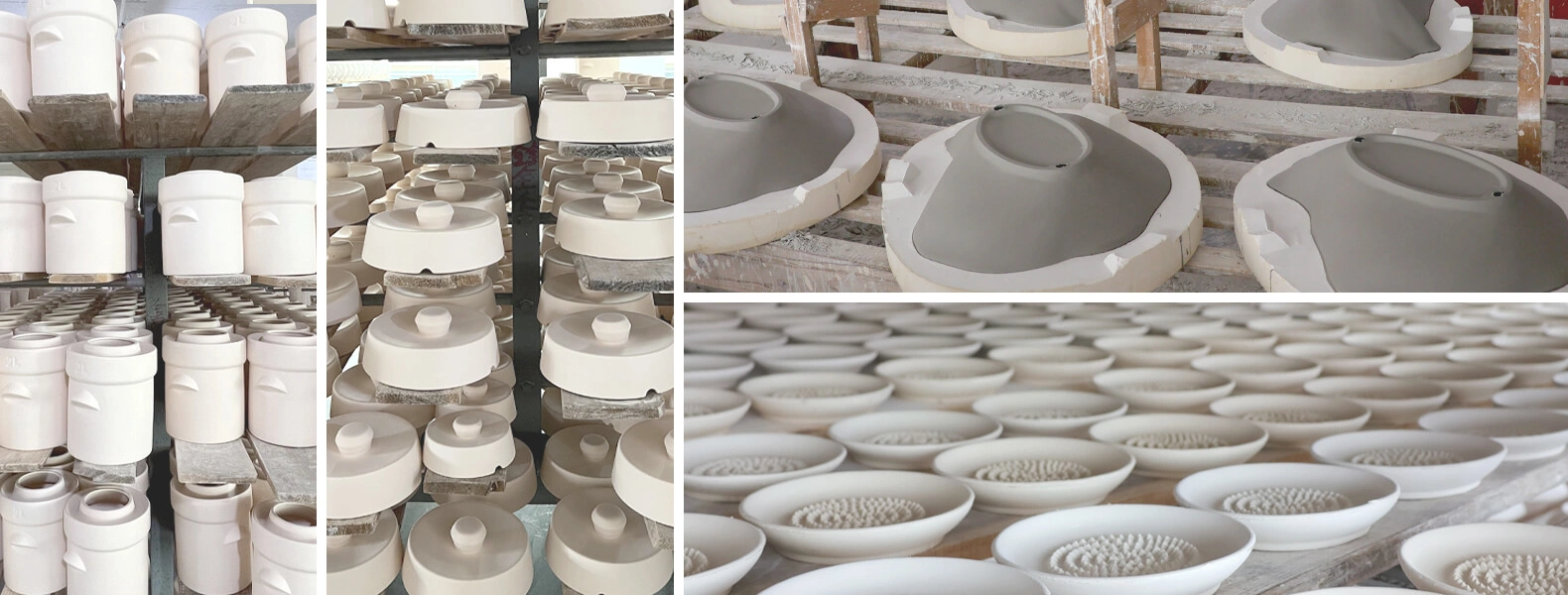
A ceramic manufacturer with in-house production capabilities can exercise control from the source:

原材料

Managing production inputs ranging from clay and glazes to decorative materials.

Production Process

Controlling the forming, glazing, firing, and post-processing stages.

Quality Inspection

Conducting checks on appearance, dimensions, and performance before the finished products are shipped.

Product Development

Adjusting product structure, glazes, colors, and decoration schemes to meet target market requirements.

Compliance Support

Coordinating with third-party laboratories for testing based on the specific requirements of different markets and clients.

For buyers, this means that if product issues arise, the problem can be traced back to the specific production stage, rather than relying solely on a third-party trader for communication.


Why Choose Qunfa as Your Ceramic Tableware Supplier?

1993年設立、, 群発陶磁器 is an experienced ceramic manufacturer with a 30,000 m² production base, 400+ employees, and mature OEM/ODM capabilities. We specialize in ceramic tableware and bakeware, using medium-temperature ceramic technology.

With experience supplying international brands including Walmart, Costco, Aldi, Disney, C&B, and Michaels, Qunfa supports global buyers with reliable production, product testing, and market-specific compliance solutions.

Looking for a reliable ceramic tableware supplier? Contact Qunfa for ceramic tableware, bakeware, OEM/ODM development, and testing support tailored to your market.

見積もりを取得する

当社製品にご関心をお寄せいただき、誠にありがとうございます。下記情報をご記入ください。担当チームより、詳細な見積もりをお送りいたします。お早めにご連絡いたします。.

よくある質問

メッセージを送信する

見積もりを取得する

当社製品にご関心をお寄せいただき、誠にありがとうございます。下記情報をご記入ください。担当チームより、詳細な見積もりをお送りいたします。お早めにご連絡いたします。.

よくある質問

メッセージを送信する

関心のある人を検索する