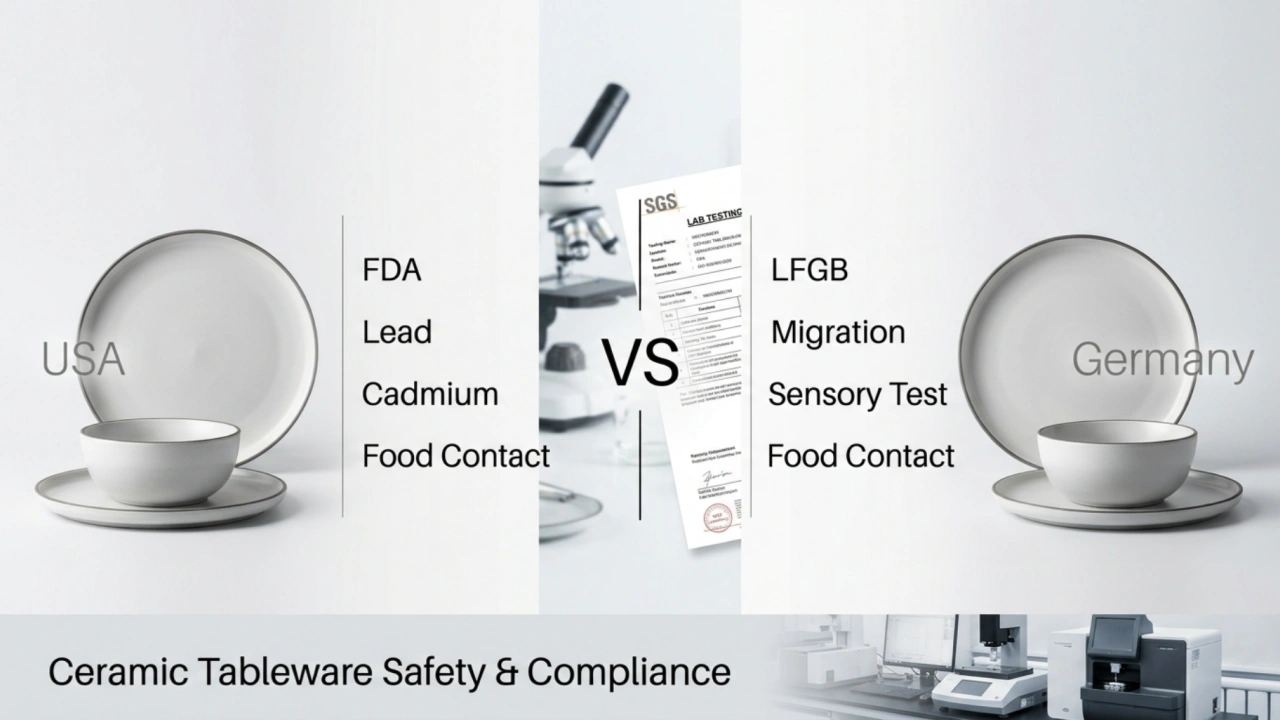
FDA and LFGB standards for ceramic tableware focus on food-contact safety, especially the migration of lead and cadmium from ceramic surfaces. For B2B buyers, importers, and distributors, understanding the testing requirements, migration limits, and supplier documentation is essential before sourcing ceramic tableware for the U.S. or European markets.
In the global ceramic tableware industry, FDA and LFGB standards for ceramic tableware are important considerations when buyers evaluate product safety and supplier compliance. For importers, wholesalers, retailers, hospitality suppliers, and private-label brands, compliance is not only about passing a laboratory test. It also depends on raw material control, glaze formulation, firing processes, finished-product testing, and reliable documentation.
The U.S. and European markets apply different regulatory approaches to food-contact materials. Therefore, buyers should understand the differences between FDA ceramic tableware requirements and LFGB ceramic tableware testing before placing bulk orders.
B2B sourcing tip: Do not ask a supplier only whether its ceramic tableware is “FDA approved” or “LFGB certified.” Ask for the applicable test report, tested product or material, laboratory information, test date, and specific lead and cadmium migration results.
I. FDA Standards: Core Requirements and Compliance Points
The U.S. Food and Drug Administration (FDA) regulates food-contact materials through applicable federal regulations, guidance, and enforcement policies. For ceramic tableware, one of the key safety concerns is the migration of heavy metals, particularly lead and cadmium, from ceramic surfaces into food.
For buyers sourcing plates, bowls, mugs, cups, baking dishes, and other ceramic products for the U.S. market, understanding FDA ceramic tableware standards can help reduce compliance risks during product development and importation.
Solubility Limits of Lead and Cadmium
FDA requirements distinguish ceramicware according to product type and characteristics. The commonly referenced limits include:
| Product Category | Lead Limit | Cadmium Limit |
|---|---|---|
| Flatware (depth ≤25 mm, e.g., plates, trays) | ≤3.0 mg/L | ≤0.5 mg/L |
| Small hollowware (volume <1.1 L, e.g., bowls, teacups) | ≤2.0 mg/L | ≤0.5 mg/L |
| Large hollowware (volume ≥1.1 L, e.g., soup tureens) | ≤1.0 mg/L | ≤0.5 mg/L |
| Cups and mugs (volume <1.1 L) | ≤0.5 mg/L | ≤0.5 mg/L |
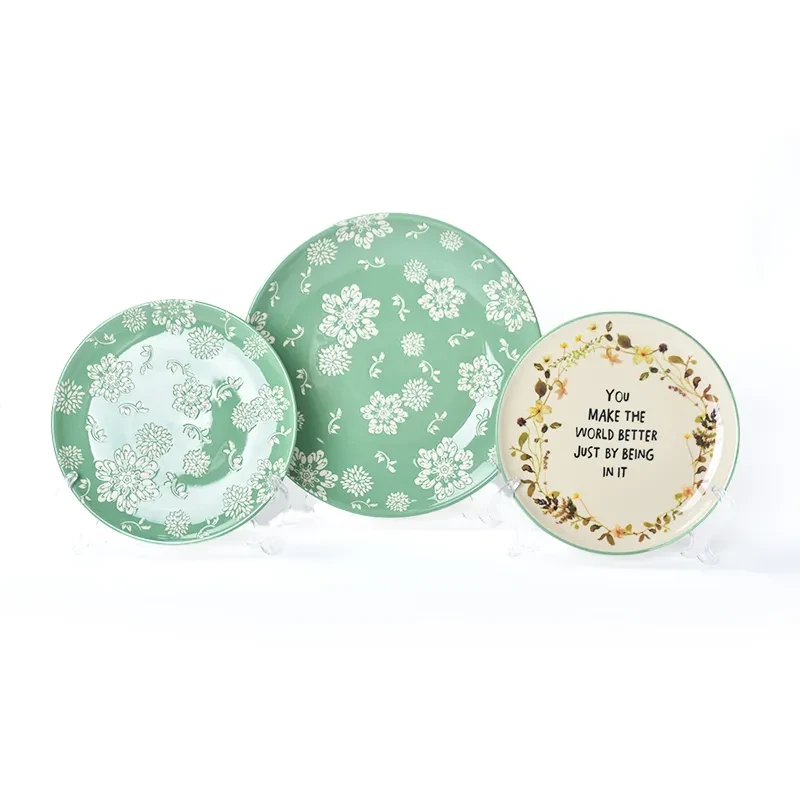
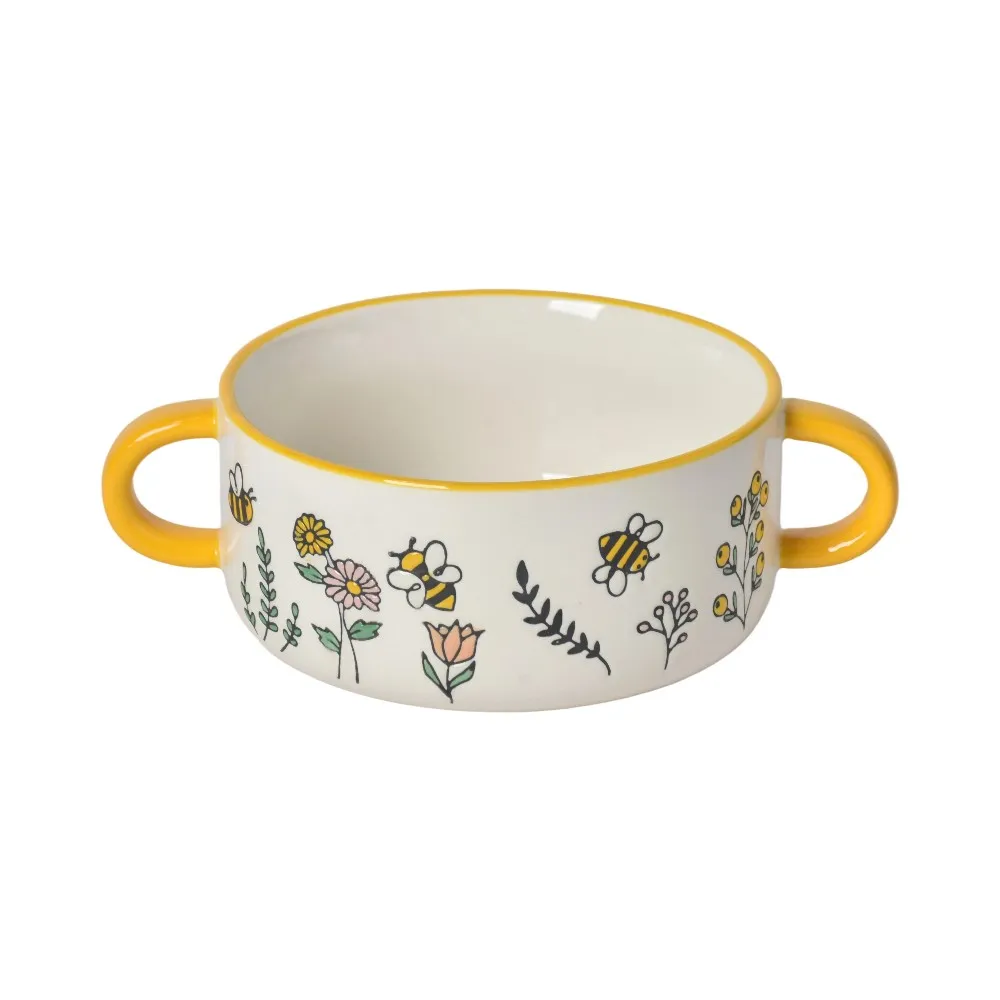
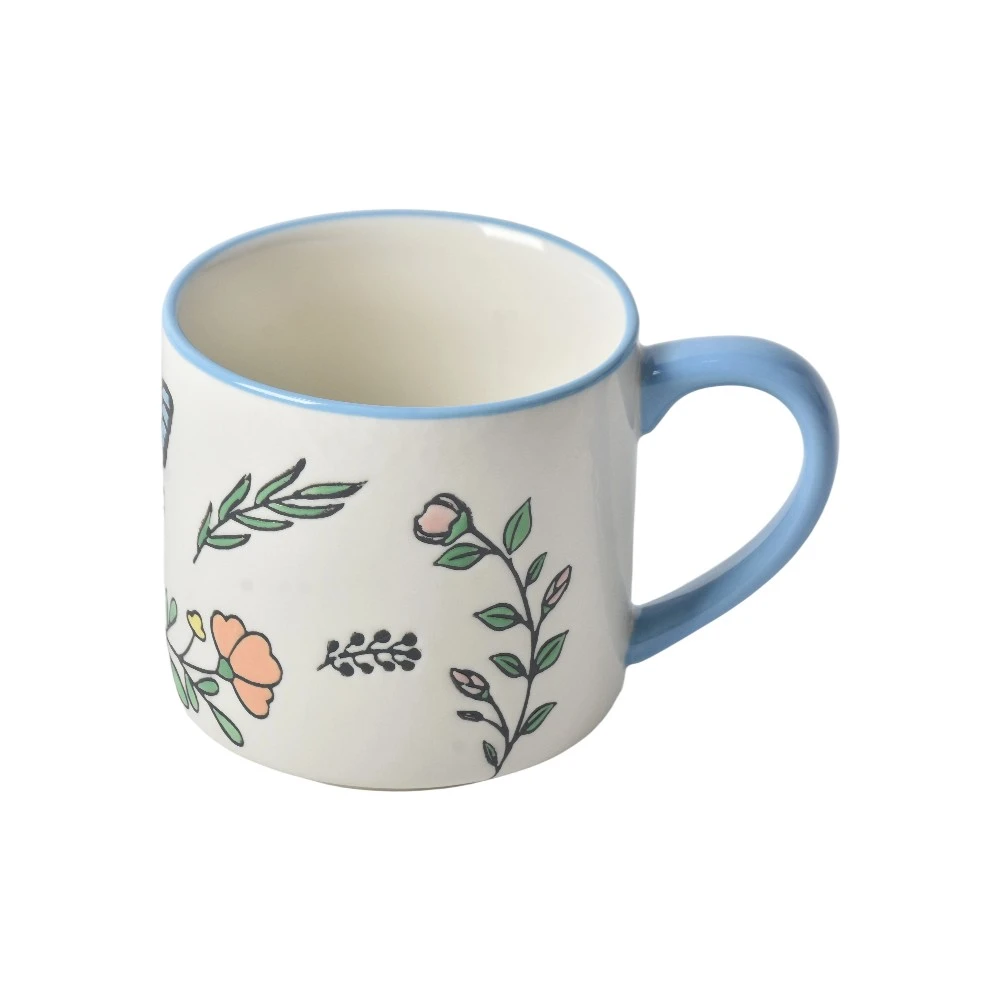
For B2B buyers, the important point is that lead and cadmium migration depends on the product category and its intended food-contact use. A supplier should therefore provide test documentation that corresponds to the actual product being purchased rather than relying on a generic certificate.
Decorative areas also require attention. Printed patterns, metallic decoration, pigments, and glaze formulations may affect heavy-metal migration. Buyers should confirm that decoration applied to food-contact or rim areas has been included in the relevant compliance evaluation.
Testing Methodology and Qualification
Testing commonly uses an acidic extraction solution to simulate contact with food. FDA-related ceramicware testing may use 4% acetic acid under specified time and temperature conditions.
For B2B procurement, buyers should focus less on simply seeing the words “FDA tested” and more on reviewing the actual laboratory report. Important information includes:
- Product name and model
- Sample identification
- Lead and cadmium results
- Test method
- Testing conditions
- Laboratory name
- Test date
- Pass/fail conclusion
This documentation provides much stronger evidence of ceramic tableware compliance than a general supplier statement.
Other Compliance Considerations
In addition to heavy-metal migration, ceramic tableware entering the U.S. market may be subject to other requirements depending on the product, market, and intended use.
Country-of-origin marking: Imported products generally need appropriate country-of-origin marking, such as “Made in China,” when applicable.
California Proposition 65: Products sold in California may require consideration of Proposition 65 warning requirements when they expose consumers to listed chemicals above applicable thresholds.
CPSIA: Additional requirements may apply to products specifically designed or marketed for children.
For importers, these requirements should be reviewed according to the actual product category and sales channel rather than treating all ceramic tableware as subject to one identical compliance checklist.

II. German LFGB Standard: Key Food-Contact Safety Requirements
LFGB refers to Germany’s Food and Feed Law (Lebensmittel-, Bedarfsgegenstände- und Futtermittelgesetzbuch). It provides a legal framework for food, consumer goods, and materials that may come into contact with food.
When buyers search for LFGB ceramic tableware, they are usually looking for evidence that ceramic products are suitable for food contact and meet relevant German or European testing requirements.
Unlike simply checking a single heavy-metal limit, LFGB-related testing can involve several aspects of product safety and suitability.
Test Items
Depending on the product and applicable test program, ceramic tableware evaluation may include:
- Initial inspection of samples and materials
- Sensory evaluation of odor and taste transfer
- Testing for lead and cadmium migration
- Testing for other relevant elements where applicable
- Additional testing of decorated or food-contact areas when required
One important consideration is sensory evaluation. Food-contact products should not negatively affect the odor or taste of food under the applicable test conditions.
For B2B buyers, this makes LFGB ceramic tableware testing particularly relevant when sourcing products intended for direct food contact, retail distribution, hospitality use, or private-label collections.
Leaching Limits
LFGB-related ceramic testing can evaluate the migration of substances from food-contact surfaces under defined laboratory conditions. Lead and cadmium limits depend on the applicable testing framework, product characteristics, and test method.
Therefore, buyers should avoid comparing an FDA result in mg/L directly with an LFGB result in mg/dm² without considering the different test methods and units.
For products with decorative patterns close to the drinking rim, additional evaluation may be required depending on the applicable test standard.
The Value of LFGB Testing for B2B Buyers
LFGB testing can provide useful evidence for buyers who need to demonstrate food-contact safety for products intended for the German or broader European market.
However, a laboratory test report should not automatically be interpreted as a universal “EU certification” that allows every ceramic product to be sold in every European market without further assessment. Importers remain responsible for checking the requirements applicable to their specific products, materials, market, and sales channel.
For this reason, professional buyers should request the actual LFGB test report and verify whether the tested sample, material, glaze, and decoration correspond to the products they plan to purchase.
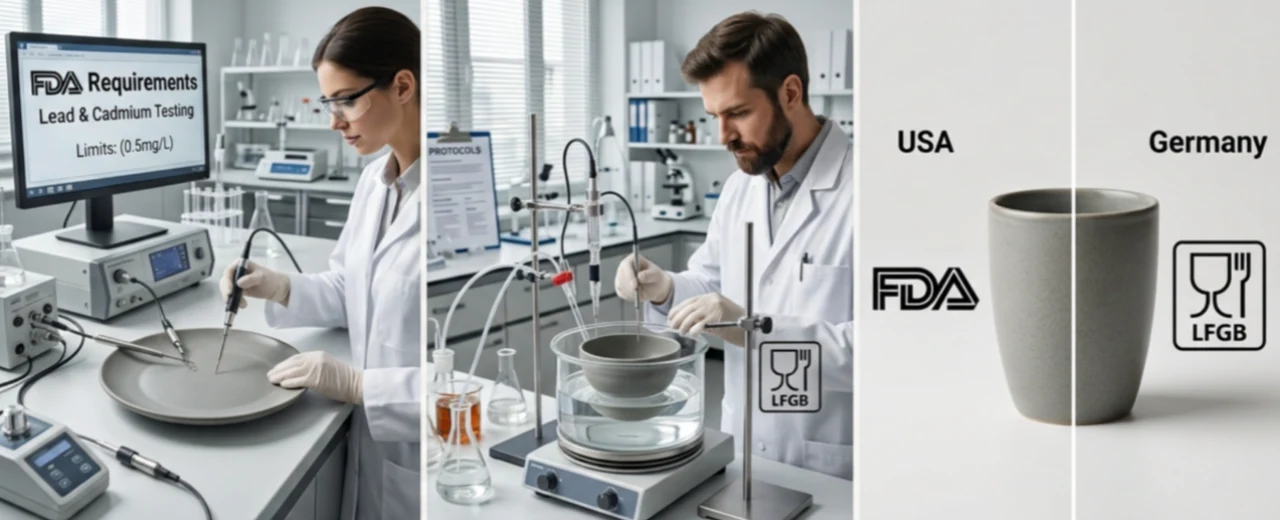
III. Core Differences between FDA and LFGB
The following table summarizes the main differences buyers should understand when comparing FDA vs LFGB ceramic tableware requirements:
| Aspect | FDA (U.S.) | LFGB (Germany) |
|---|---|---|
| Regulatory philosophy | Threshold based | Positive list based |
| Test items | Lead and cadmium leaching | Lead, cadmium, cobalt leaching + sensory testing |
| Limit system | Graded by product shape and volume | Uniform limit per surface area |
| Additional requirements | Proposition 65, CPSIA | Sensory evaluation (odour, taste) |
| Market recognition | Mandatory for U.S. market entry | Highest trust mark in the EU |
FDA vs LFGB: What Does It Mean for Buyers?
The biggest practical difference is that buyers should not assume that passing one test automatically means a product satisfies every requirement in another market.
For example, a ceramic dinnerware collection may have a test report demonstrating compliance for the U.S. market, but a European buyer may still require additional testing or documentation based on the destination market and applicable food-contact regulations.
For international sourcing, it is therefore more effective to work with a manufacturer that understands different market requirements and can provide product-specific testing documentation.
IV. How B2B Buyers Choose Compliant Suppliers
For B2B buyers, choosing a ceramic manufacturer with strong quality control is just as important as checking a certificate. A supplier’s compliance capability should cover the entire manufacturing process, from raw materials and glaze formulation to firing, inspection, and finished-product testing.
1. Check Certification and Test Qualifications
Prioritize suppliers that can provide relevant FDA and LFGB test reports for the products you intend to purchase.
Do not rely only on a logo or certificate displayed on a website. Ask:
- Which product was tested?
- Which laboratory conducted the test?
- When was it tested?
- What substances were tested?
- What were the actual migration results?
- Does the report correspond to the current glaze and decoration?
This approach helps buyers distinguish between genuine product testing and generic compliance claims.
2. Review Manufacturer Experience
Long-term manufacturing experience can be valuable when sourcing ceramic tableware because stable compliance depends on consistent control of raw materials, glaze formulas, firing conditions, and production quality.
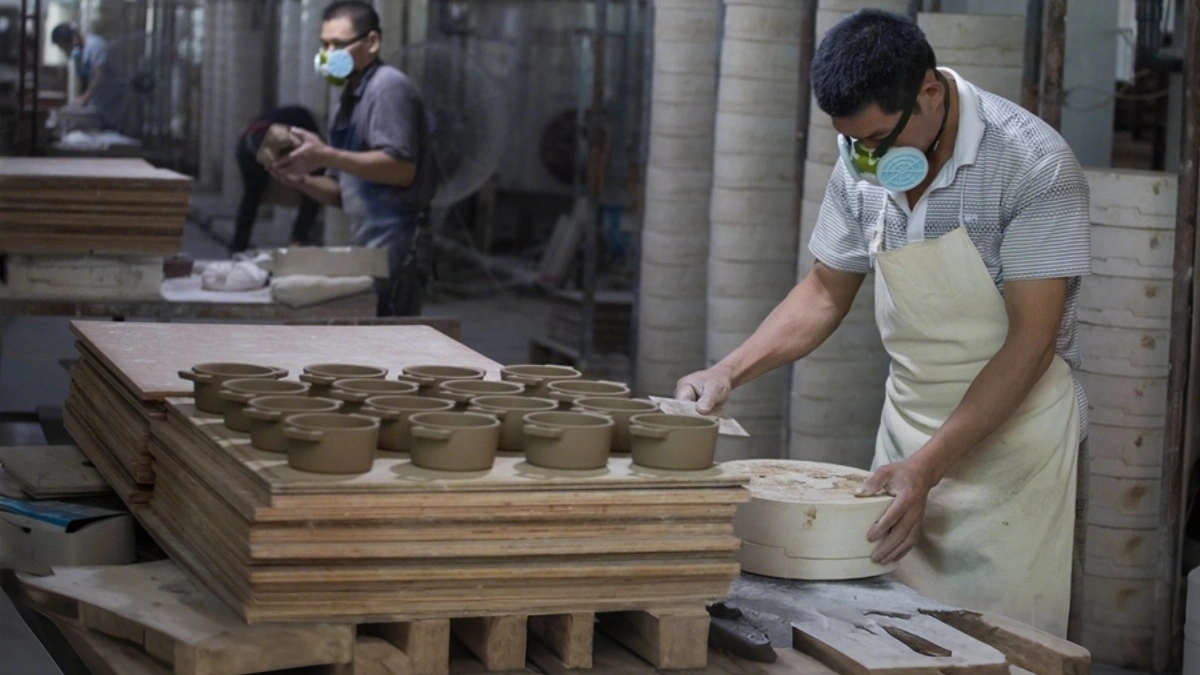
Qunfa Ceramics, established in 1993, has more than 30 years of experience in the R&D and manufacturing of household ceramic products. Its production base covers approximately 30,000 square meters and has more than 400 employees.
Qunfa specializes in medium-temperature ceramic production and manufactures ceramic tableware and bakeware, as well as ceramic pet products and garden planters. Its OEM/ODM capabilities allow B2B customers to develop products for different retail, hospitality, and household applications.
3. Ask for Test Reports
Before placing a bulk order, request the supplier’s latest reports from recognized third-party laboratories such as SGS, Bureau Veritas, Intertek, or another qualified testing laboratory.
For ceramic tableware, pay particular attention to:
- Lead migration
- Cadmium migration
- Other applicable heavy metals
- Food-contact surface testing
- Rim-area testing where applicable
- Odor and taste evaluation where required
The report should match the actual product, glaze, decoration, and production specification being ordered.
4. Learn How Raw Materials Are Controlled
Ceramic tableware safety starts with raw materials.
A professional ceramic manufacturer should have clear controls for clay bodies, glaze materials, pigments, decorative materials, and other production inputs. Glaze formulation is particularly important because poorly controlled raw materials or unsuitable decoration can increase the risk of heavy-metal migration.
Buyers should therefore ask manufacturers about:
- Raw-material supplier qualification
- Glaze formulation control
- Heavy-metal screening
- Batch traceability
- Firing temperature and process control
- Finished-product inspection
- Third-party laboratory testing
Related internal link suggestion: Ceramic Manufacturing Process / Ceramic Tableware Quality Control
FAQ: FDA and LFGB Ceramic Tableware
Is FDA certification required for ceramic tableware?
There is not one universal FDA “certificate” that covers every ceramic tableware product. U.S. compliance depends on applicable FDA regulations and the specific product, materials, and intended food-contact use. Buyers should request relevant test reports and compliance documentation from the manufacturer.
What does LFGB mean for ceramic tableware?
LFGB is Germany’s food and consumer-goods legislation framework. LFGB ceramic tableware testing can evaluate food-contact safety, including migration of certain substances and, where applicable, sensory properties such as odor and taste.
What should I ask a ceramic tableware manufacturer before ordering?
Ask for product-specific test reports, raw-material controls, glaze information, production specifications, quality-control procedures, and documentation relevant to your target market. If you need private-label or OEM products, confirm that the final customized glaze, decoration, and packaging specifications can also be evaluated when required.
Can one ceramic tableware test report cover all products?
Not necessarily. A test report is normally associated with a specific product, material, construction, glaze, decoration, and test scope. When the product specification changes, buyers should confirm whether additional testing is necessary.
Conclusion
Choosing the right ceramic manufacturer is the first step toward safer products and smoother market entry.
With more than 30 years of manufacturing experience, Qunfa Ceramics supplies ceramic tableware and bakeware for global B2B buyers, with support for OEM/ODM projects and food-contact compliance testing.