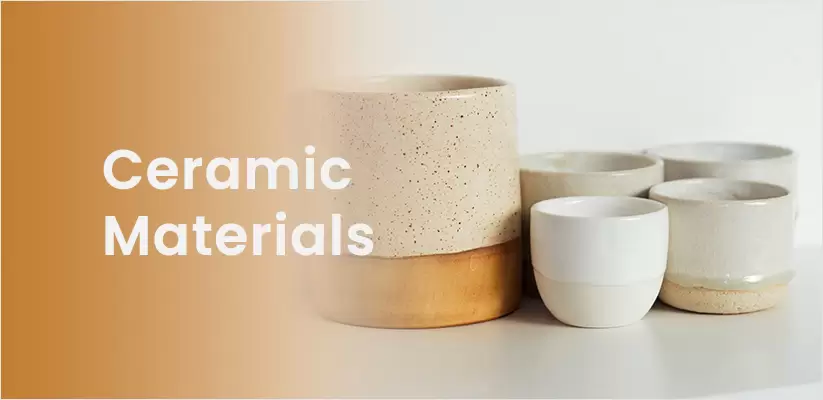
I. Different Categories Under “Ceramics”
In the home ceramics industry, products with varying prices, textures, and performance are often grouped under the general term “ceramics.” However, this label actually covers a wide range of fundamentally different materials.
Much like how “wood” includes pine, oak, and walnut, ceramics also consist of multiple categories with distinct properties.
For manufacturers of daily-use ceramics, helping consumers understand these differences improves purchasing decisions and ensures each material performs optimally in its intended use.
This article provides a systematic comparison of four mainstream ceramic materials across key dimensions:
- Raw materials
- Firing temperature
- Water absorption rate
- Typical applications
- Usage recommendations
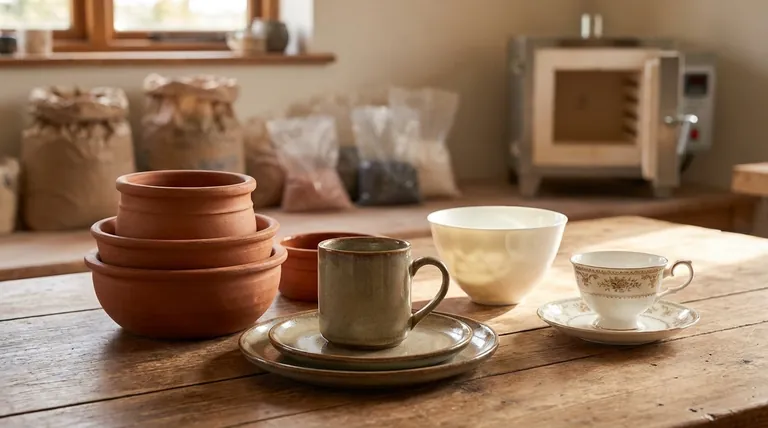
II. Comparative Analysis of Four Main Ceramic Materials
1. Pottery
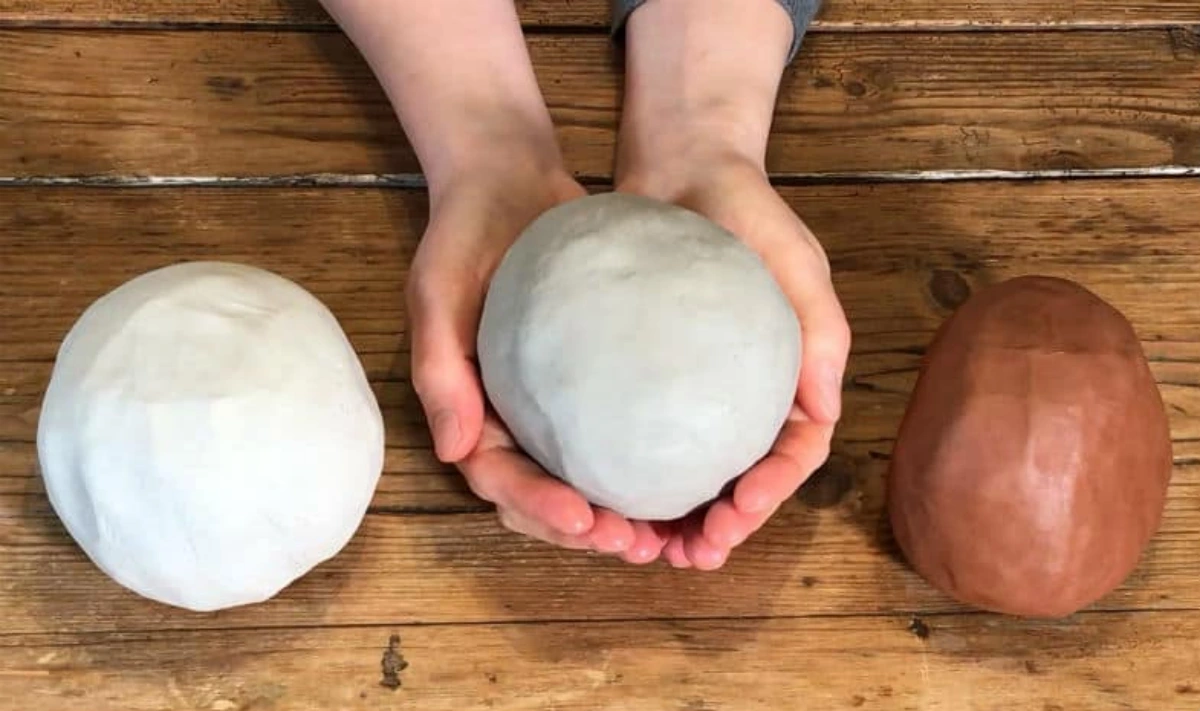
Pottery is the earliest form of ceramic in human history and remains relevant in certain applications today.
Key Specifications:
- Raw Material: Ordinary clay with high impurities
- Firing Temperature: 800°C – 1000°C
- Water Absorption: Typically >5%
- Structure: Porous, opaque
Typical Products:
- Earthenware pots
- Flower pots
- Rustic containers
Performance Features:
- Excellent porosity supports slow, even heat distribution
- Ideal for stewing and traditional cooking
- Easily absorbs liquids, especially acidic or dark substances
- Relatively soft and fragile
Usage Tips:
- Suitable for cooking or decorative use
- Avoid long-term storage of liquids
- Limit dishwasher use
2. Stoneware
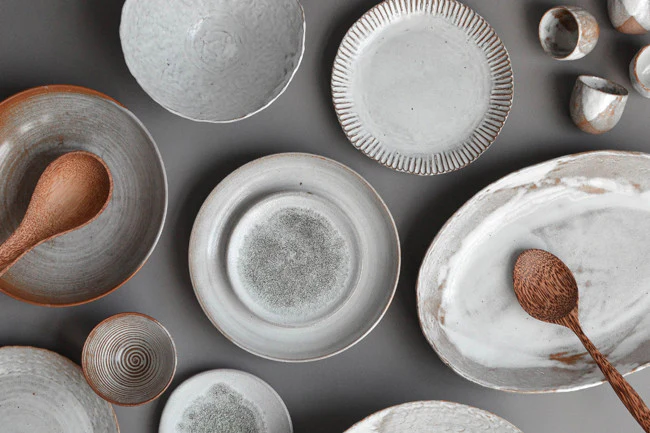
Stoneware sits between pottery and porcelain, offering a balanced combination of durability and practicality.
Key Specifications:
- Raw Material: Mineral clay (e.g., kaolin mixed with feldspar)
- Firing Temperature: 1150°C – 1250°C
- Water Absorption: <2%
- Structure: Dense, non-transparent
Typical Products:
- Coffee mugs
- Rustic-style tableware
- Baking dishes
Performance Features:
- Combines the thickness of pottery with the density of porcelain
- Lower water absorption reduces bacterial growth
- Stronger impact resistance than porcelain
- Usually glazed for easy cleaning
Usage Tips:
- Safe for dishwasher, microwave, oven, and refrigerator
- Ideal for daily use with balanced performance
3. Porcelain
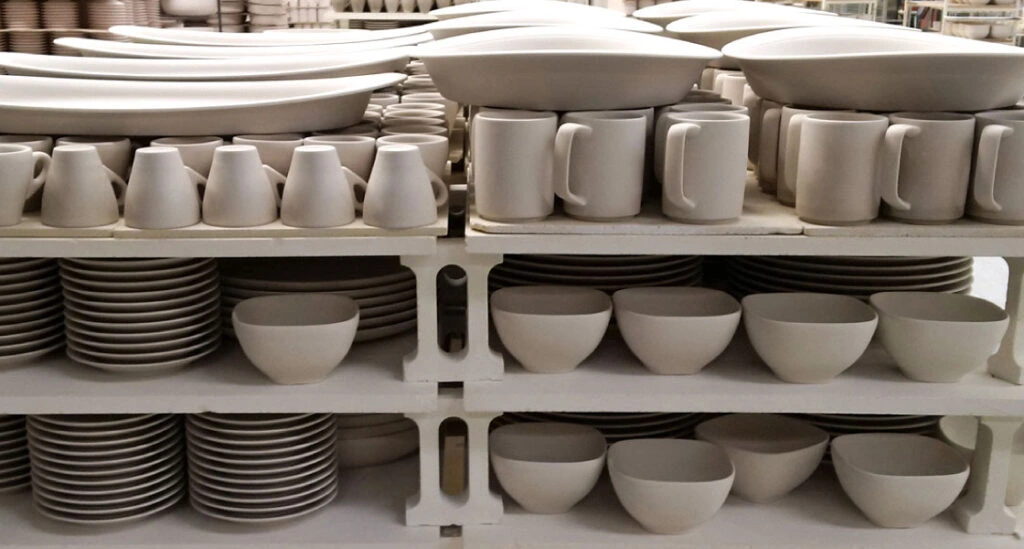
Porcelain is a hallmark of ceramic craftsmanship and widely regarded as the standard for fine ceramics.
Key Specifications:
- Raw Material: High-purity kaolin, feldspar, quartz
- Firing Temperature: 1200°C – 1400°C
- Water Absorption: <0.5%
- Structure: Dense, hard, slightly translucent
Typical Products:
- Fine tableware
- Hotel whiteware
- Gift sets
Performance Features:
- Smooth, non-porous surface with excellent hygiene
- Resistant to bacterial retention
- Produces a clear, resonant sound when tapped
- Elegant and refined appearance
- More brittle under strong impact
Usage Tips:
- Suitable for dining, hosting, and gifting
- Easy to clean
- Avoid strong impacts during use and storage
4. Bone China
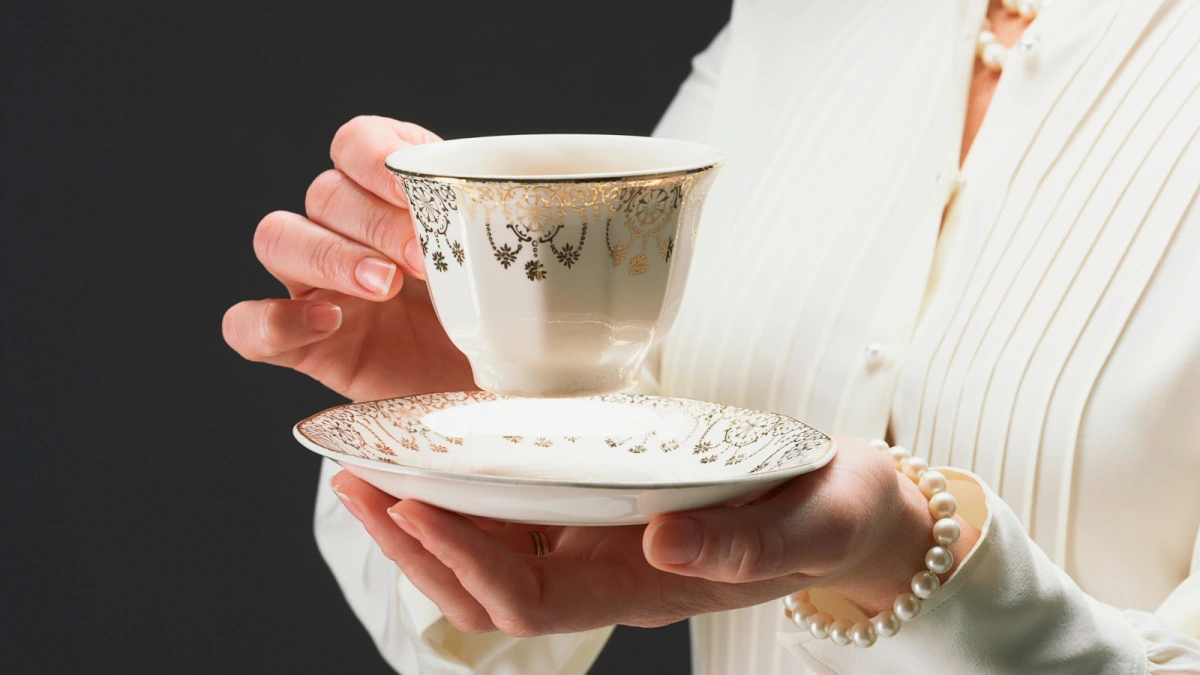
Bone china is a premium category of porcelain known for its lightness and translucency.
Key Specifications:
- Raw Material: ≥25% bone ash added to porcelain clay
- Firing Temperature: ~1200°C (bisque) + 1050°C (glaze)
- Water Absorption: <0.5%
- Structure: Extremely thin, highly translucent
Typical Products:
- English tea sets
- Luxury tableware
- High-end giftware
Performance Features:
- Higher strength than standard porcelain at equal thickness
- Lightweight and refined
- Superior translucency and visual appeal
- Still fragile despite improved strength
Usage Tips:
- Ideal for formal dining and gifting
- Dishwasher safe (with care)
- Avoid impact with hard objects
III. Choosing the Right Material for Your Needs
From the analysis above, it’s clear that “ceramics” is not a single material, but a spectrum ranging from pottery to bone china. Each serves a specific purpose:
- Pottery → Best for breathability and slow cooking
- Stoneware → Ideal for durability and everyday use
- Porcelain → Perfect for elegance and easy maintenance
- Bone China → Suited for luxury, gifting, and special occasions
Consumers should avoid chasing the “best” material and instead choose based on:
- Usage habits
- Budget
- Aesthetic preferences
Final Thoughts
Understanding material differences is essential for selecting and properly using ceramic products.
Next time you see a product labeled “ceramics,” look beyond the term and identify its specific material. That insight will be far more valuable than the label itself.
Partner With a Reliable Household Ceramics Manufacturer
Choosing the right ceramic material is only half the equation—the other half is working with a manufacturer who truly understands how to turn materials into market-ready products.
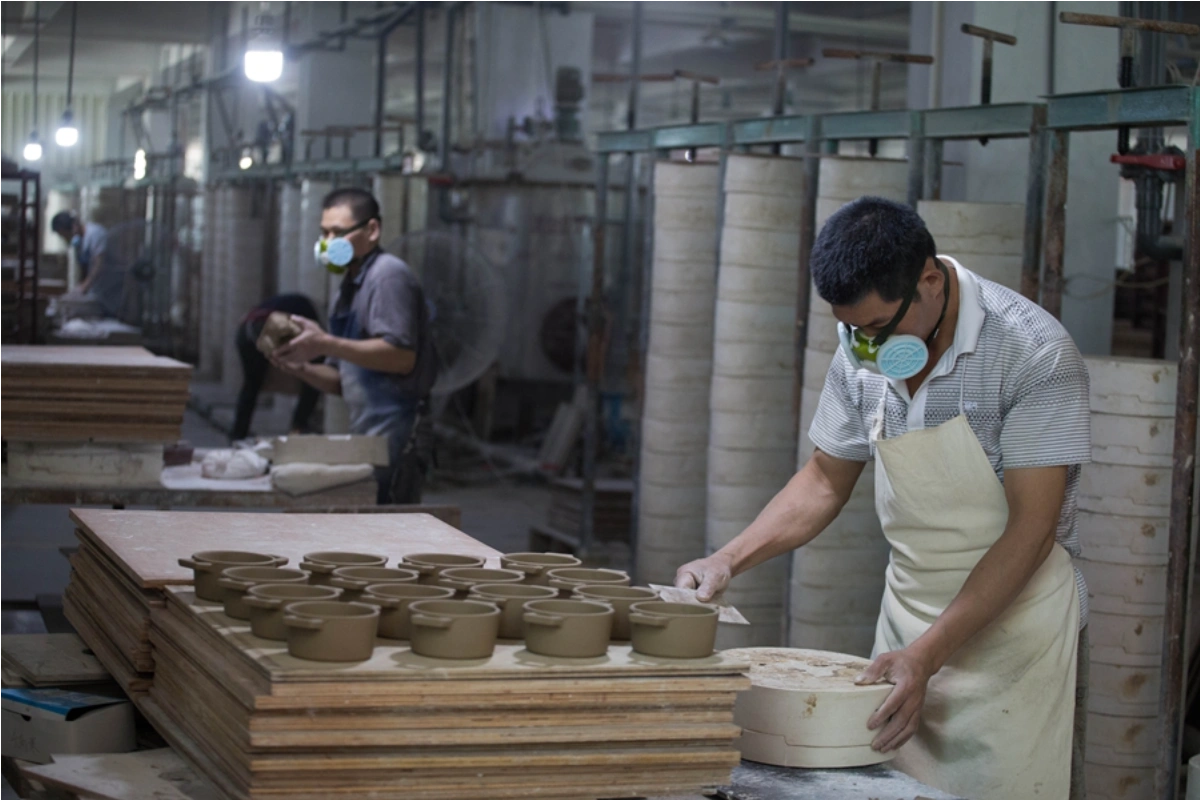
Qunfa Ceramics, established in 1993, specializes in the R&D and manufacturing of household ceramic products, with strong OEM/ODM capabilities and advanced production technology. Today, we operate a modern facility covering 30,000㎡ with over 400 skilled employees, ensuring stable capacity and consistent quality.
As a trusted supplier to global brands such as Walmart, Costco, Aldi, Disney, C&B, and Michaels, we have extensive experience in meeting international standards and large-scale project demands. Our core product lines include:
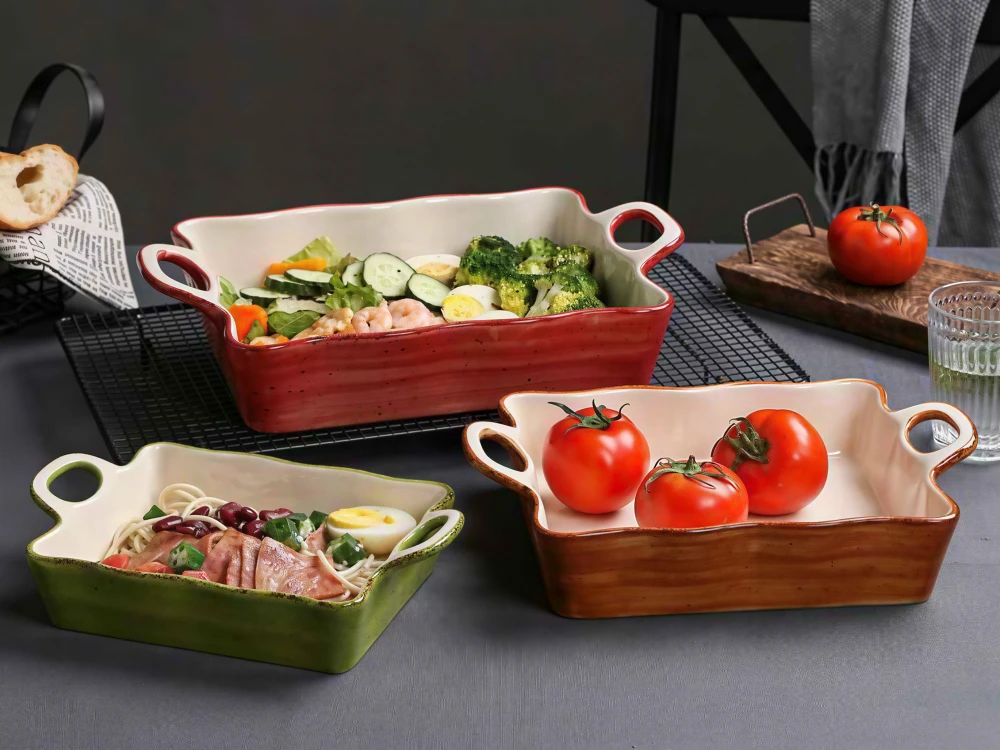
- Ceramic Bakeware
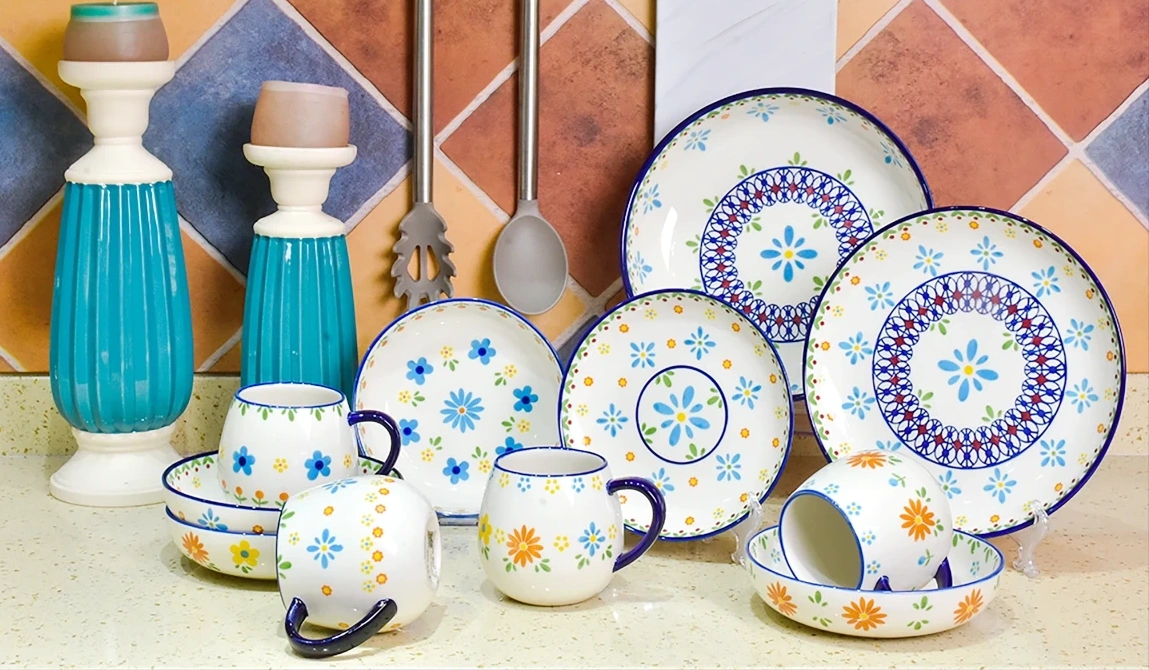
- Ceramic Tableware
Whether you are developing a new product line, expanding your brand, or looking for a reliable long-term partner, Qunfa Ceramics can support you from concept to mass production.
👉 Contact us today to start your custom ceramic project and bring your ideas to life.