How do Chinese and Western ceramic tableware styles differ, and why does it matter for buyers and manufacturers? The answer lies in culture, dining habits, product functionality, and manufacturing technology. This guide compares the two major tableware systems from the perspective of Medium-Temperature Ceramics, helping importers, wholesalers, retailers, and private-label brands choose the right custom ceramic tableware solutions while understanding the production advantages of medium-temperature porcelain.
Global demand for ceramic tableware continues to diversify as consumers seek products that combine aesthetics, functionality, and durability. While Chinese and Western tableware often share the same material, their design language, dining logic, and market positioning are fundamentally different.
For manufacturers and sourcing professionals, understanding these differences is essential for developing competitive product collections and building successful OEM/ODM projects.
From the perspective of Medium-Temperature Ceramics, this article explores how shape, decoration, glaze, product configuration, and cultural preferences influence today’s ceramic tableware styles, while explaining why medium-temperature ceramics have become an ideal material for producing both traditional and contemporary collections.
Form and Function: China’s Bowl-Centered Culture vs. Western Plate-Centered Dining
The biggest distinction between Chinese and Western ceramic tableware styles begins with the shape and purpose of each piece.
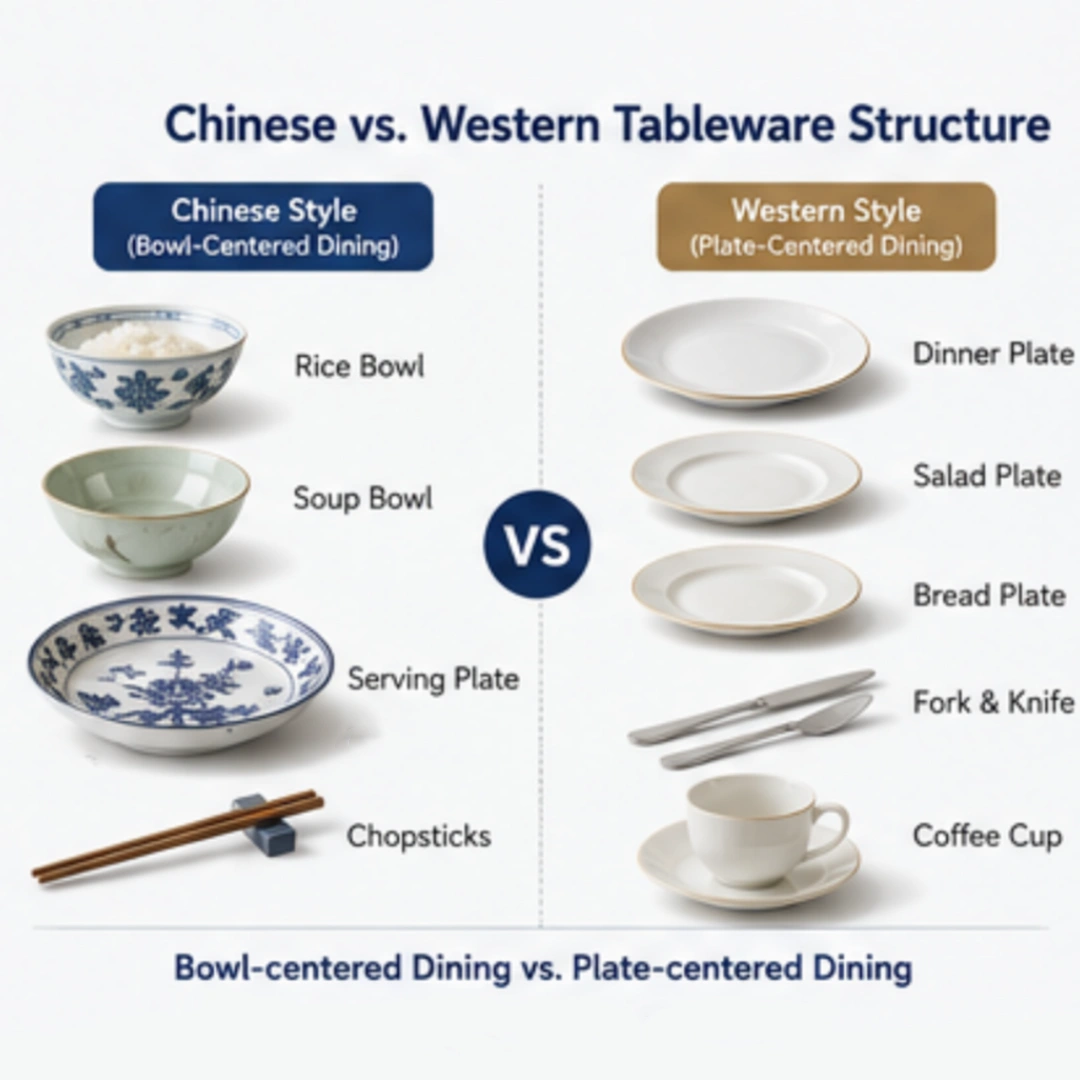
Chinese Tableware: The “Kingdom of Bowls”
Chinese dining revolves around bowls. Rice bowls, soup bowls, noodle bowls, serving bowls, and condiment bowls all play important roles.
Typical characteristics include:
| Chinese Tableware Features | メリット |
|---|---|
| Deep bowl design | Easier to eat with chopsticks |
| Rounded silhouettes | Comfortable to hold by hand |
| Shared serving plates | Support family-style dining |
| Symmetrical shapes | Reflect harmony and completeness |
Unlike Western dining, Chinese meals emphasize sharing dishes placed in the center of the table. Therefore, plates usually feature raised rims and practical proportions rather than strict size standards.
This design philosophy reflects traditional Chinese values such as harmony, balance, and family togetherness.
Western Tableware: A Highly Specialized Plate System
Western dining follows an individual serving system.
Instead of one universal plate, a complete place setting often includes:
- Dinner plate
- Salad plate
- Bread plate
- Soup plate or bowl
- Dessert plate
- Coffee cup and saucer
Each item serves a specific course and follows standardized dimensions.
Flat surfaces make cutting food with knives and forks easier, while square, oval, and organic shapes are widely accepted in modern Western collections.
Manufacturing Perspective
について Medium-Temperature Ceramics, these structural differences directly affect mold design and production.
Chinese bowls require excellent forming performance and shrinkage control to prevent deformation, while large Western dinner plates demand exceptional flatness during firing.
With firing temperatures typically between 1,000°C and 1,200°C, medium-temperature ceramics provide an ideal balance between dimensional stability, production efficiency, and design flexibility—allowing manufacturers to produce both elegant Chinese bowls and perfectly flat Western dinner plates using the same production system.
Decoration and Patterns: Symbolic Storytelling vs. Minimalist Elegance
Decoration is where culture becomes immediately recognizable.
Chinese Ceramic Decoration
Traditional Chinese tableware often tells stories through symbolic motifs.
Popular decorative themes include:
- Blue-and-white floral patterns
- Lotus and peony
- Landscape paintings
- Birds and flowers
- Dragons and phoenixes
- Traditional blessing symbols
Rather than leaving empty space, Chinese decoration usually covers large portions of the surface, creating rich visual narratives.
Today’s “New Chinese Style” simplifies these traditional motifs into cleaner, more contemporary graphics that appeal to younger consumers while preserving Eastern cultural identity.
Western Decorative Style
Western ceramic aesthetics emphasize refinement and restraint.
Common features include:
- Pure white porcelain
- Floral borders
- Geometric patterns
- Embossed textures
- Gold or platinum rims
Instead of dense decoration, Western designs intentionally leave negative space, allowing food presentation to become the visual focus.
Production Advantages of Medium-Temperature Ceramics
The versatility of Medium-Temperature Ceramics allows manufacturers to support multiple decoration techniques, including:
- Underglaze decoration
- In-glaze decoration
- Overglaze decals
- Metallic rim decoration
- Relief glazing
Compared with low-fired ceramics, medium-temperature ceramics offer improved durability while maintaining excellent color performance, making it ideal for premium custom ceramic tableware collections.
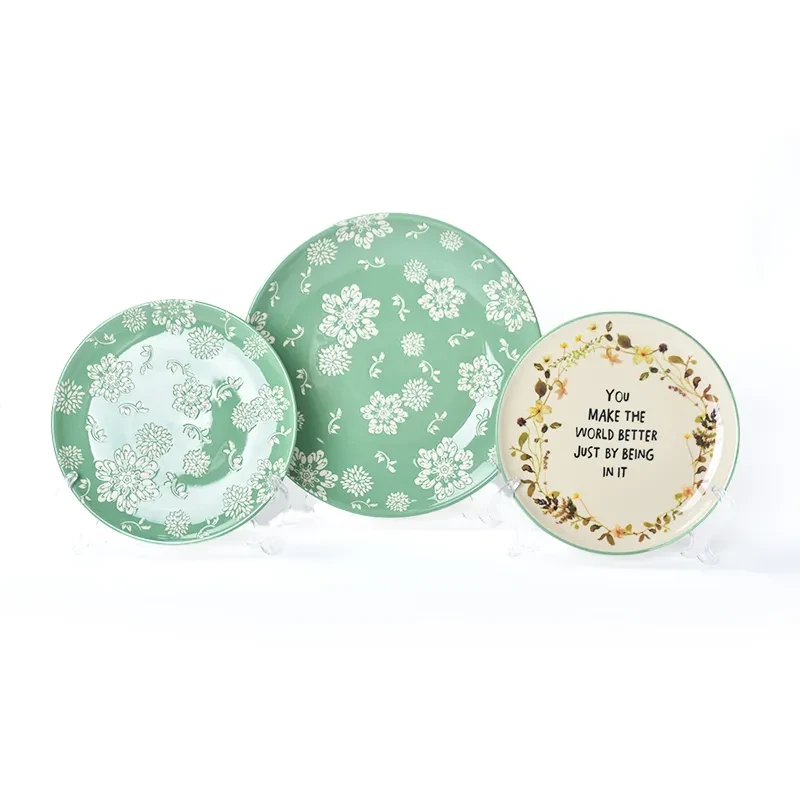
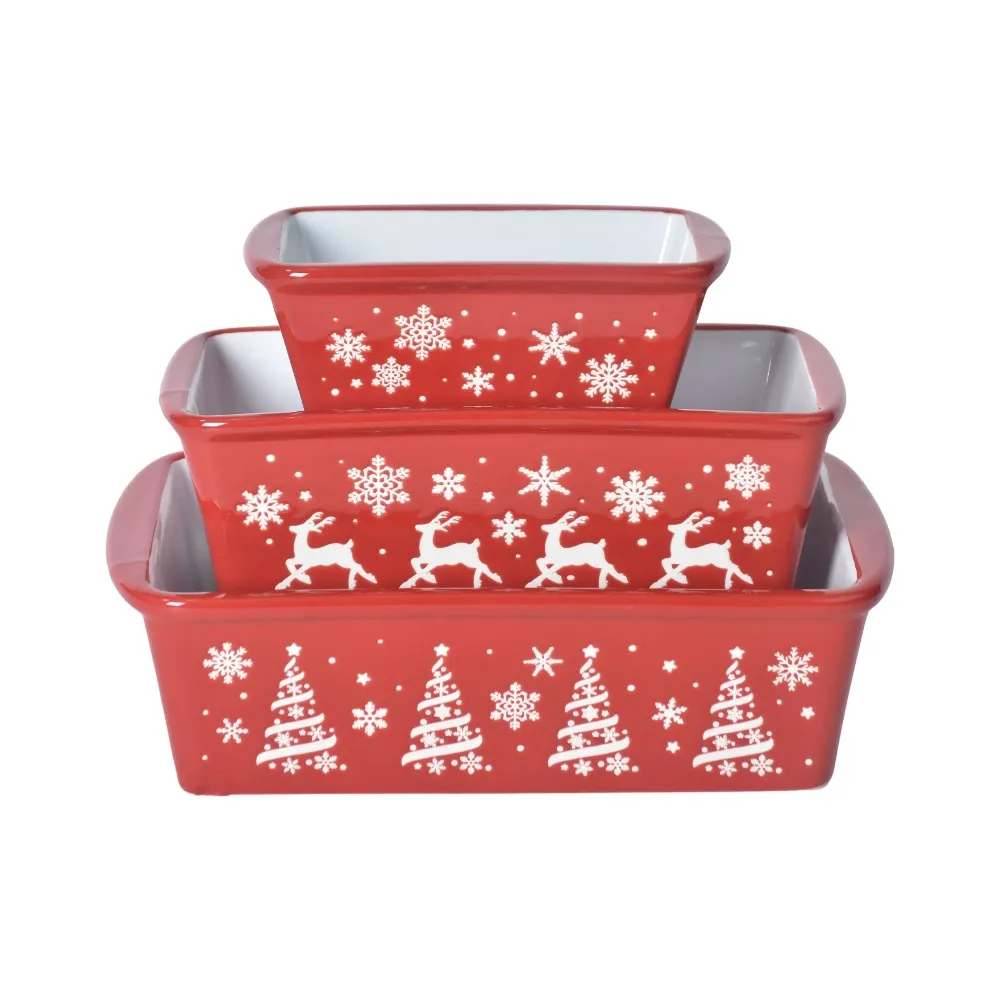
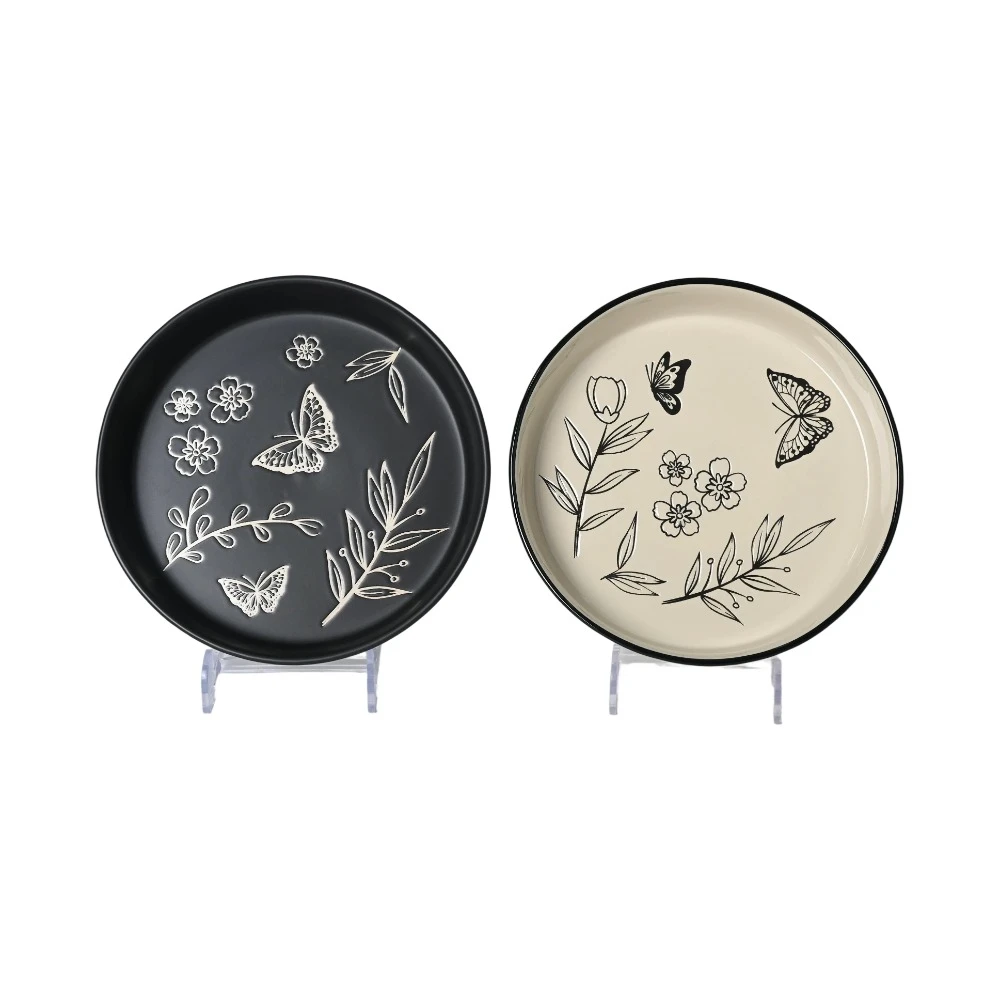
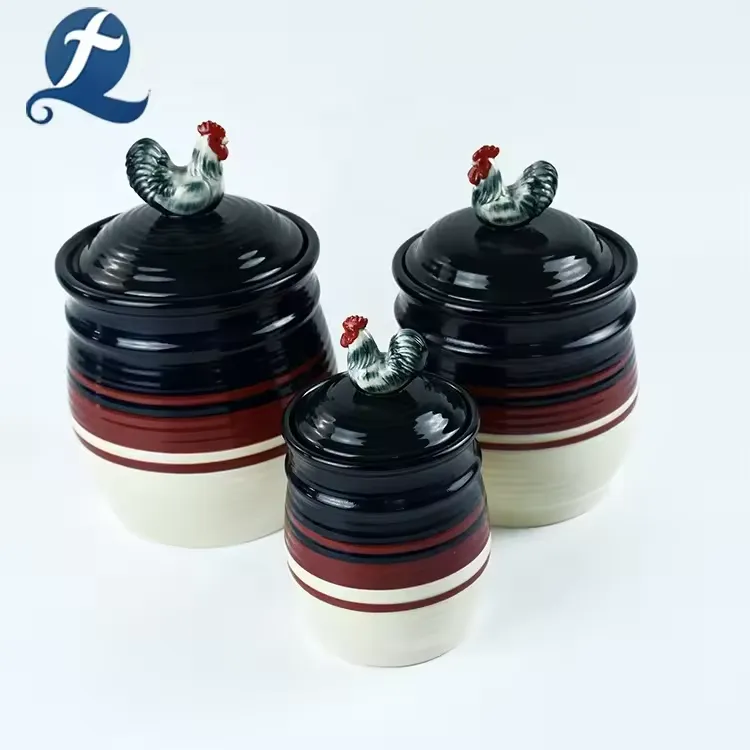
Glaze Color and Surface Texture: Warm Oriental Softness vs. Bright Western Purity
Glaze color strongly influences consumers’ perception of product quality.
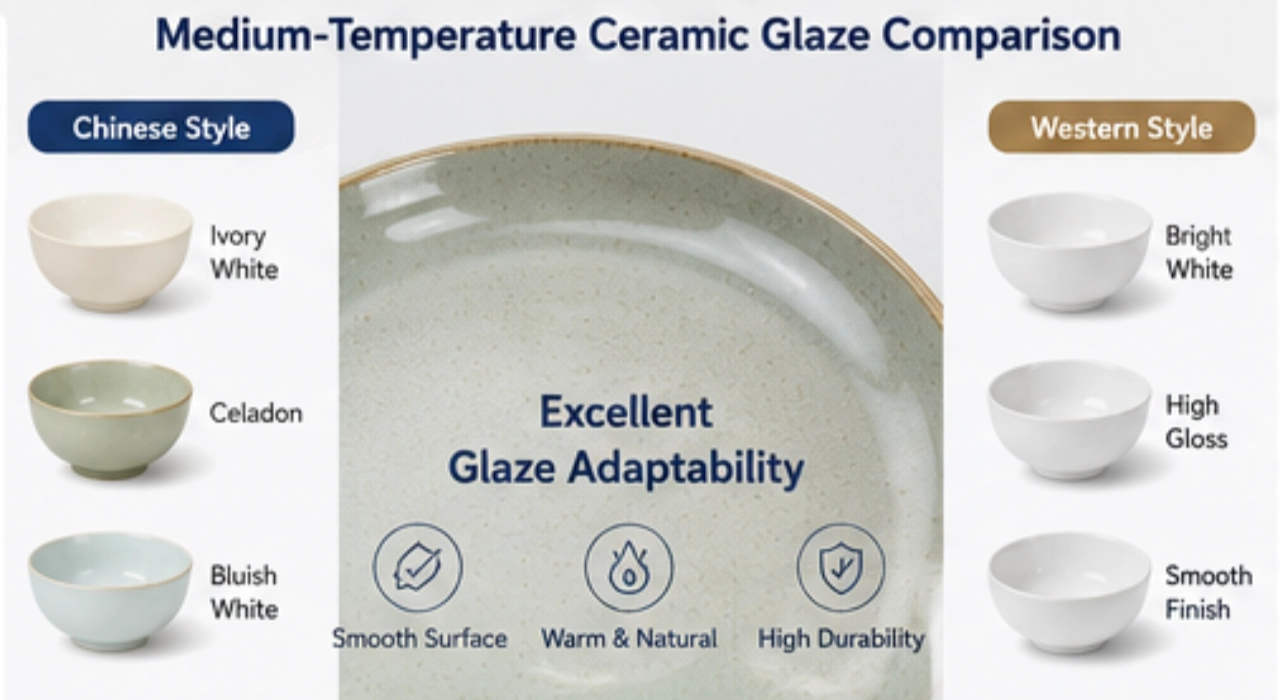
Chinese Glaze Preferences
Chinese consumers generally prefer softer glaze colors such as:
- Bluish white
- Ivory white
- Celadon green
- Warm cream tones
These glazes create a jade-like appearance with gentle reflections and handcrafted character.
Slight variations along rims are often appreciated as signs of artisan craftsmanship.
Western Glaze Preferences
Western markets generally favor:
- Bright white
- High gloss
- Smooth mirror-like surfaces
- Consistent whiteness
A clean white glaze highlights food presentation while conveying hygiene, professionalism, and modernity.
Why Medium-Temperature Ceramics Excel
One of the biggest advantages of Medium-Temperature Ceramics is glaze flexibility.
By adjusting glaze formulations, manufacturers can produce both:
- Warm Oriental jade-like finishes
- Bright European-style glossy white surfaces
This flexibility allows factories to serve multiple international markets using the same production infrastructure, reducing manufacturing costs while expanding product portfolios.
Product Configuration: Shared Dining vs. Individual Place Settings
The composition of a tableware set reflects different dining etiquette.
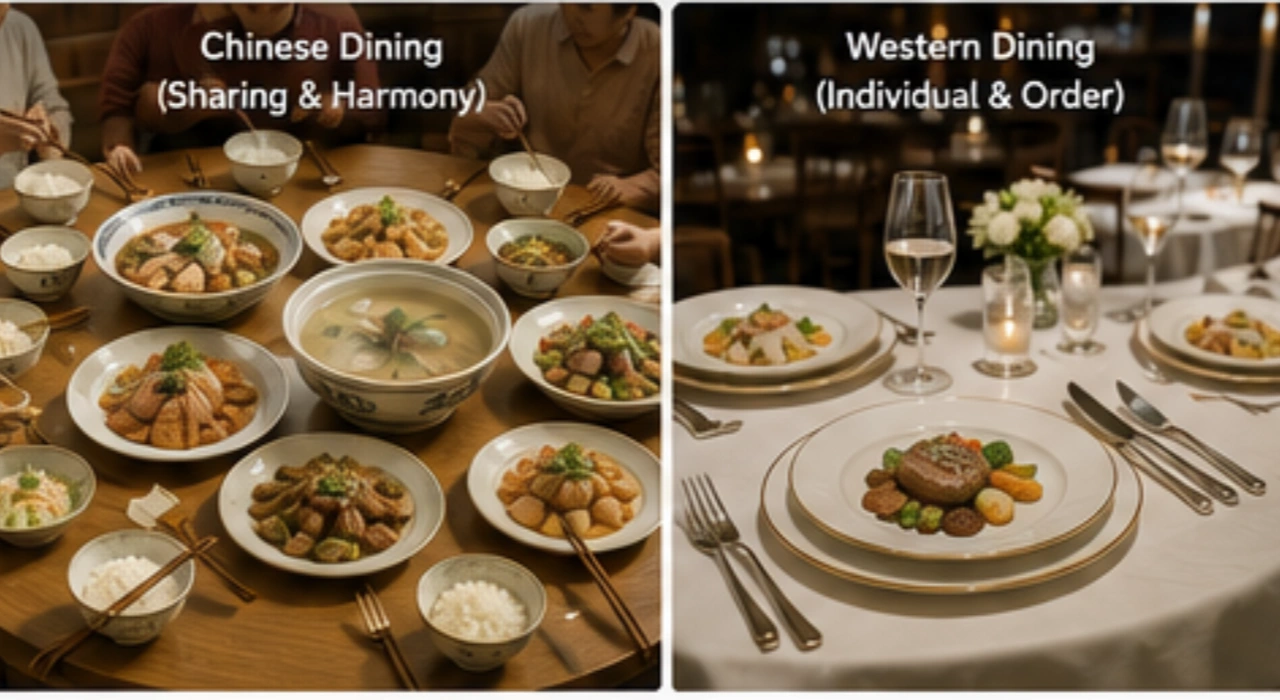
Chinese Tableware Sets
Chinese dining emphasizes sharing.
Typical sets include:
- Rice bowls
- Serving plates
- Soup bowls
- Chopstick rests
- Serving spoons
- Large communal dishes
Product combinations focus on flexibility, family gatherings, and banquet dining.
Western Dinnerware Sets
Western tableware follows a complete individual serving system.
Each diner receives a coordinated set consisting of:
- Dinner plate
- Salad plate
- Soup bowl
- Bread plate
- Coffee cup
- Saucer
As courses change, tableware changes accordingly.
This creates opportunities for premium multi-piece collections and gift sets.
Business Implications
For B2B buyers, product configuration directly affects packaging strategy, retail positioning, and pricing.
Chinese collections often emphasize mix-and-match flexibility, while Western collections typically prioritize complete coordinated sets.
The durability and cost efficiency of Medium-Temperature Ceramics make them an excellent solution for both retail and hospitality markets.
Market Positioning: Finding the Right Style Strategy
For today’s ceramic manufacturers, success depends on choosing the right product direction.
Traditional Chinese Collection
こんな方に最適:
- Chinese restaurants
- Tea houses
- Asian supermarkets
- Traditional homeware brands
Key features include:
- Multiple bowl styles
- Blue-and-white decoration
- Symbolic cultural elements
- Natural glaze finishes
Pure Western Collection
Suitable for:
- ホテル
- レストラン
- Department stores
- Modern home brands
Design priorities include:
- Minimalist aesthetics
- Bright white glaze
- High dimensional consistency
- Dishwasher durability
East-Meets-West Collection
The fastest-growing segment combines Eastern inspiration with contemporary design.
例としては、次のようなものがあります:
- Ink-wash patterns on minimalist dinner plates
- Traditional lattice motifs with modern silhouettes
- Calligraphy accents on white porcelain
- Neutral glaze colors paired with subtle cultural elements
Because Medium-Temperature Ceramics offer excellent forming and decorating flexibility, they are particularly well suited for these hybrid collections that appeal to younger global consumers.
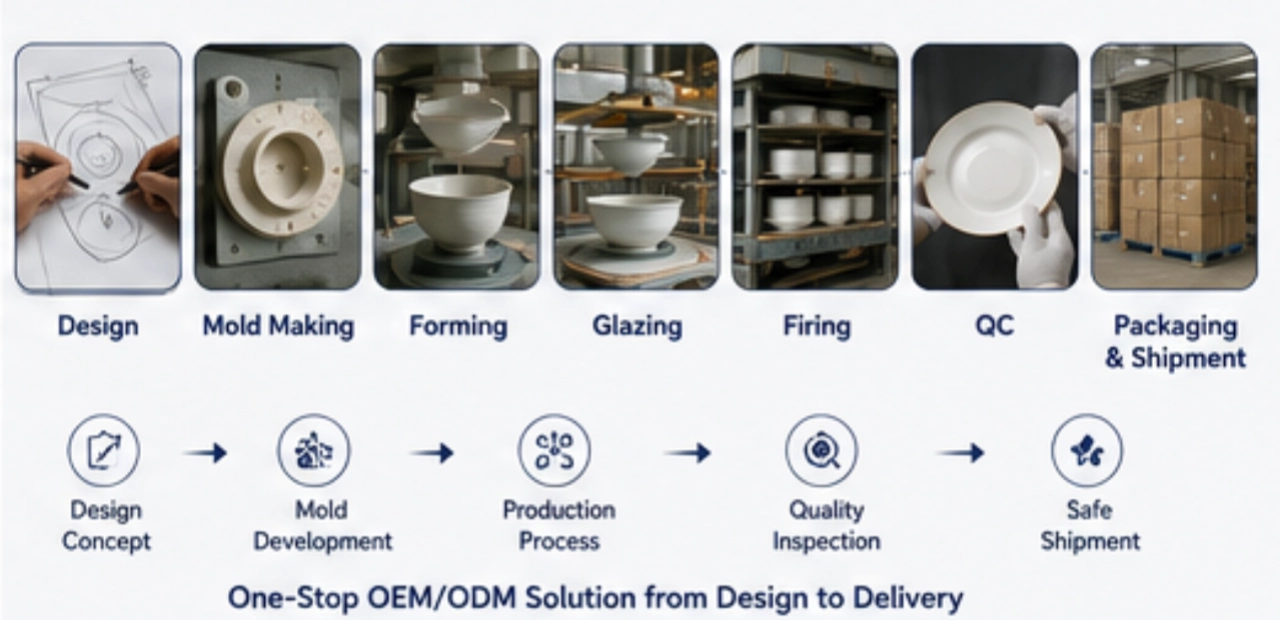
Why Medium-Temperature Ceramics Are an Excellent Choice for OEM & ODM Projects
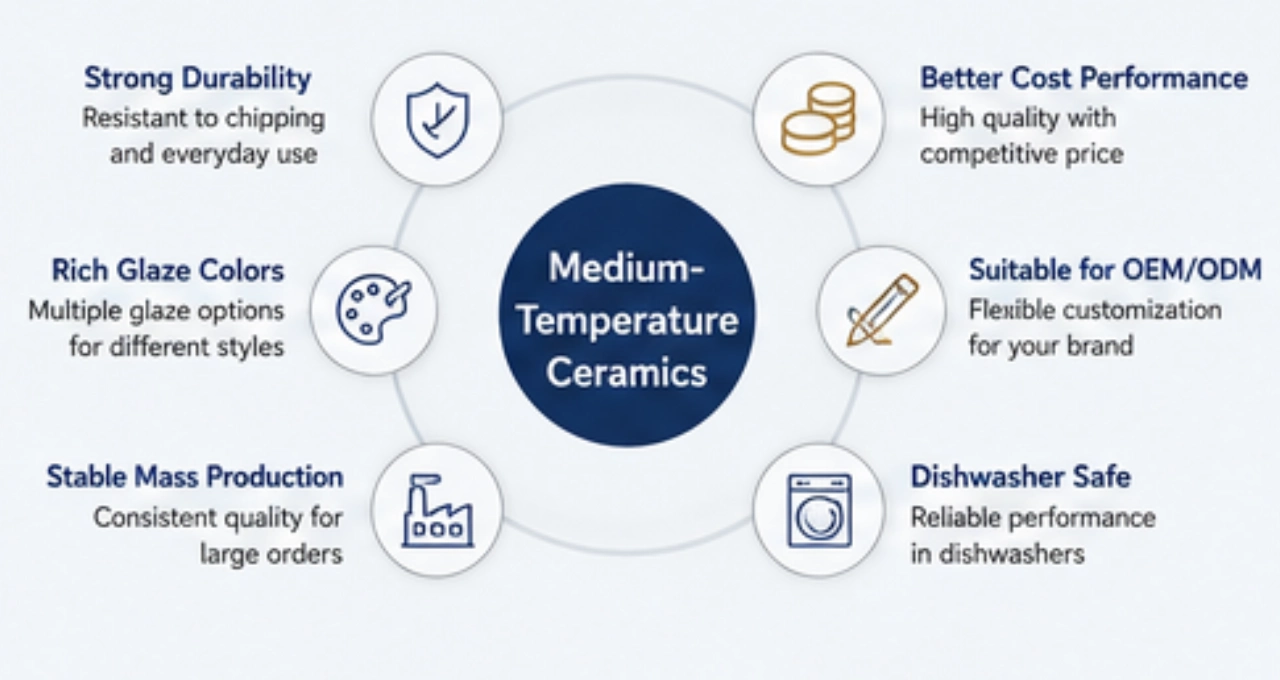
For importers, wholesalers, and private-label brands, Medium-Temperature Ceramics provide several competitive advantages:
- Stable quality across mass production
- Excellent glaze adaptability
- Strong cost-performance ratio
- Flexible shape development
- Wide decoration compatibility
- Reliable dishwasher performance
- Suitable for hospitality and retail markets
- Ideal for オーダーメイドのセラミック食器 manufacturing
These benefits make medium-temperature ceramics a practical solution for brands seeking differentiated products without sacrificing production efficiency.
よくある質問
What are Medium-Temperature Ceramics?
Medium-temperature ceramics are typically fired between 1,000°C and 1,200°C, offering an excellent balance of strength, glaze quality, production efficiency, and design flexibility.
Which ceramic tableware style is more popular internationally?
There is no single winner. Chinese-inspired collections continue to grow in Asian markets and premium lifestyle brands, while minimalist Western designs remain highly popular across Europe, North America, hotels, and restaurants.
Why choose custom ceramic tableware instead of standard products?
Custom ceramic tableware helps brands create unique collections through exclusive shapes, colors, decorations, packaging, and branding. It also improves market differentiation and strengthens brand identity.
Is Medium-Temperature Ceramics suitable for OEM and ODM manufacturing?
Yes. Medium-temperature ceramics offer excellent forming performance, consistent glaze quality, and flexible decoration techniques, making them highly suitable for OEM and ODM production across multiple international markets.
結論
Chinese and Western ceramic tableware styles represent two distinct cultural philosophies expressed through shape, decoration, glaze, and dining etiquette. For manufacturers and global buyers, understanding these differences is essential for developing products that resonate with specific markets.
Thanks to the versatility of Medium-Temperature Ceramics, manufacturers can efficiently produce traditional Chinese collections, elegant Western dinnerware, or innovative fusion designs using the same production platform. This manufacturing flexibility enables brands to respond quickly to changing consumer preferences while maintaining consistent quality and competitive costs.
Qunfa Ceramicsと提携して、オーダーメイドのセラミック食器を製作しましょう
設立は 1993, 群発陶磁器 is a leading manufacturer specializing in Medium-Temperature Ceramics そして オーダーメイドのセラミック食器. With a 30,000㎡ production facility, 400名以上の従業員, and strong OEM/ODM機能, we provide reliable manufacturing solutions for global brands, wholesalers, and retailers.
As a trusted supplier to international companies including Walmart, Costco, Aldi, Disney, C&B, and Michaels, we produce high-quality dinnerware, bakeware, kitchenware, pet products, and garden ceramics with consistent quality and flexible customization.
Whether you’re developing Chinese-inspired, Western, or contemporary ceramic collections, 群発陶磁器 is ready to support your business with professional manufacturing and customized solutions. Contact us today to discuss your next project.