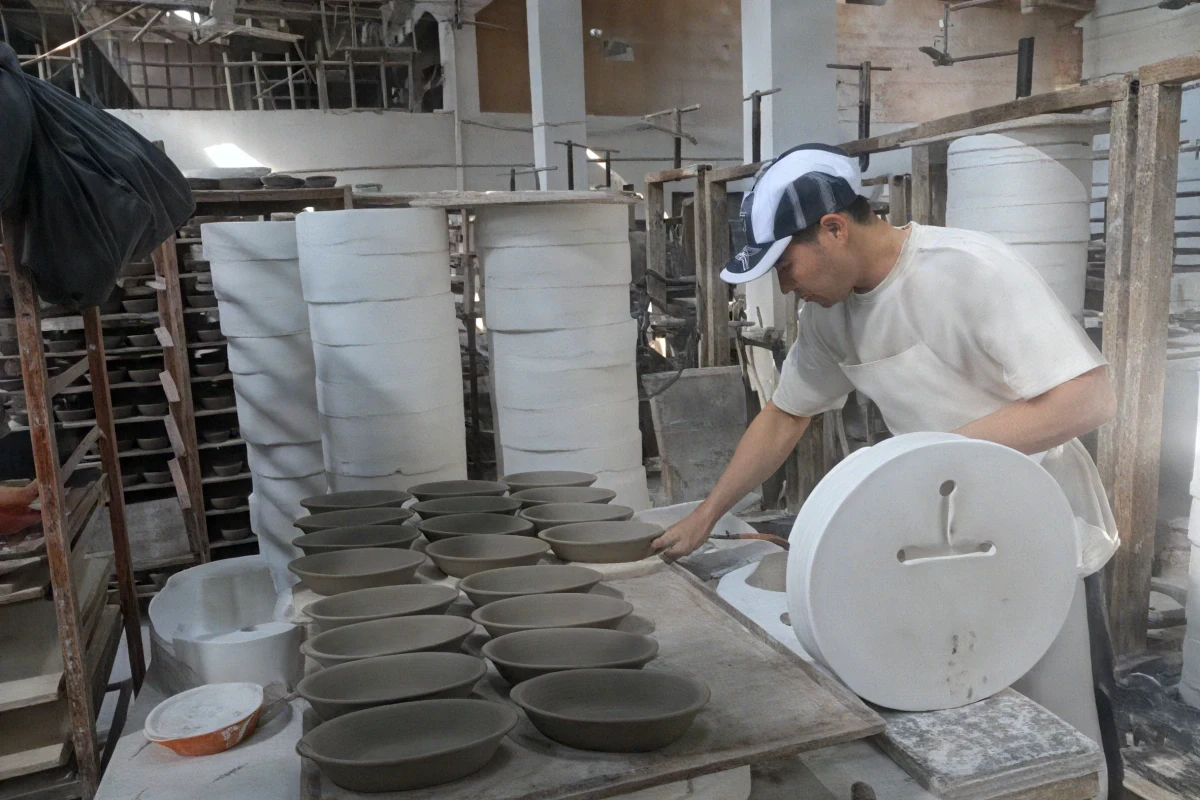
Woher weiß man, ob ein Hersteller von Qualitätskontrollsystemen für Keramik kann bei jeder Lieferung gleichbleibend die gleiche Qualität gewährleisten? Die Antwort liegt in seinem Qualitätskontrollsystem für Keramik, den Prüfverfahren und der Rückverfolgbarkeit der Produktion. In diesem Leitfaden erklären wir, wie Qunfa Keramik ist für die Maßgenauigkeit, die optische Prüfung und die Prozesssteuerung zuständig, um eine stabile Fertigung von Keramikprodukten im mittleren Temperaturbereich für globale Marken zu gewährleisten.
Bei der Beschaffung Keramikgeschirr für mittlere Temperaturen oder Keramik-Backformen, vergleichen Einkäufer häufig Designs, Preise und Produktionskapazitäten. Erfahrene Importeure wissen jedoch, dass all dies keine Rolle spielt, wenn die Produktqualität nicht von einer Produktionscharge zur nächsten gleichbleibend ist.
Nach mehr als 30 Jahren Herstellung von Keramikartikeln des täglichen Bedarfs, haben wir gelernt, dass ein ansprechendes Design zwar den ersten Auftrag einbringen mag, aber Gleichbleibende Qualität sorgt für langfristige Partnerschaften. Deshalb basiert unser Produktionssystem auf strengen Qualitätskontrollstandards für Keramik, messbare Prüfkriterien und standardisierte Fertigungsverfahren statt auf subjektive Beurteilungen.
In diesem Artikel möchten wir Ihnen erläutern, wie unser internes Produktabnahmesystem uns dabei hilft, bei jedem Keramikprojekt eine zuverlässige Qualität zu gewährleisten.
Normen bilden die Grundlage für die Qualitätskontrolle bei Keramikprodukten
Wie die meisten professionellen Hersteller ist auch unser Qualitätssicherungssystem für Keramik hält sich an die chinesischen nationalen Normen für Keramikartikel des täglichen Gebrauchs und wendet darüber hinaus strengere interne Abnahmekriterien an.
- GB/T 3532-2022 zur Produktbewertung
- GB 4806.4 für die Lebensmittelsicherheit
- GB/T 3298 und GB/T 3299 für Prüfverfahren
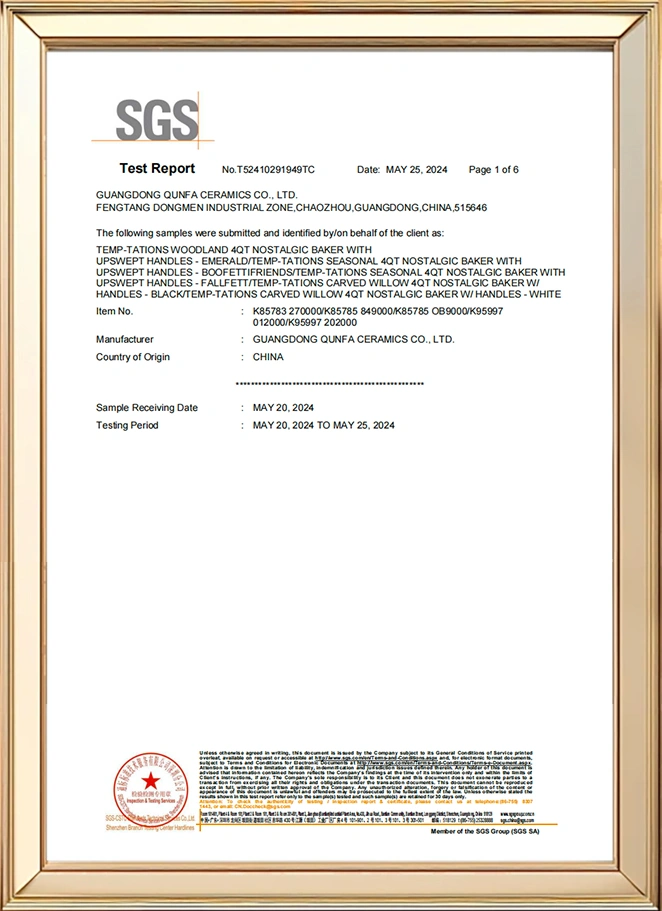
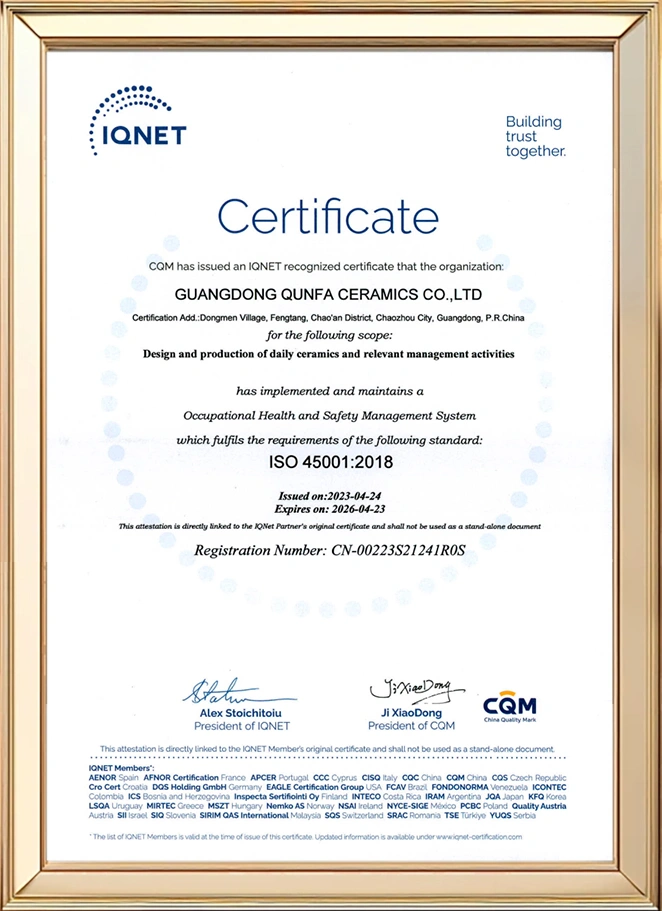
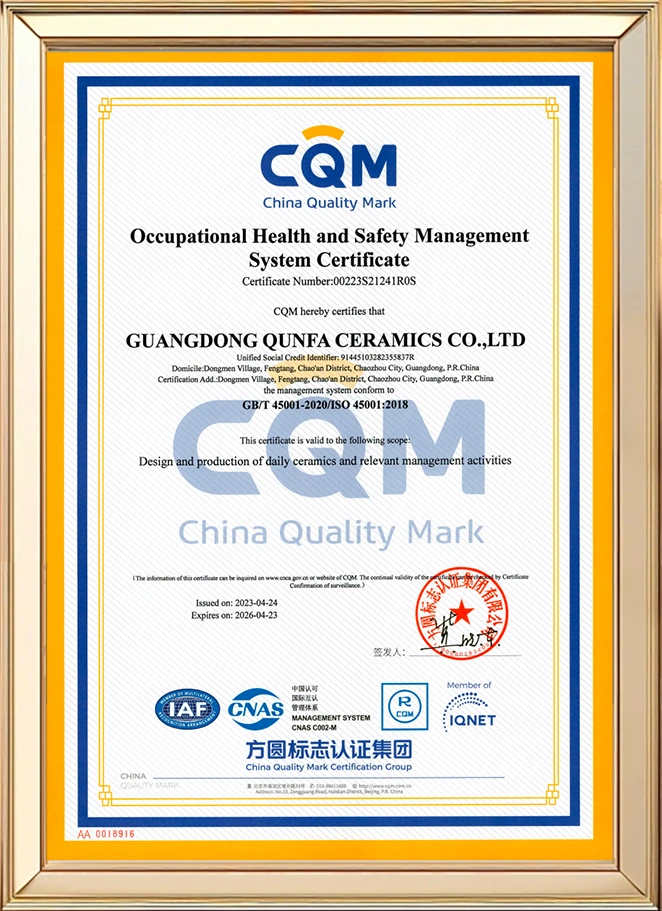
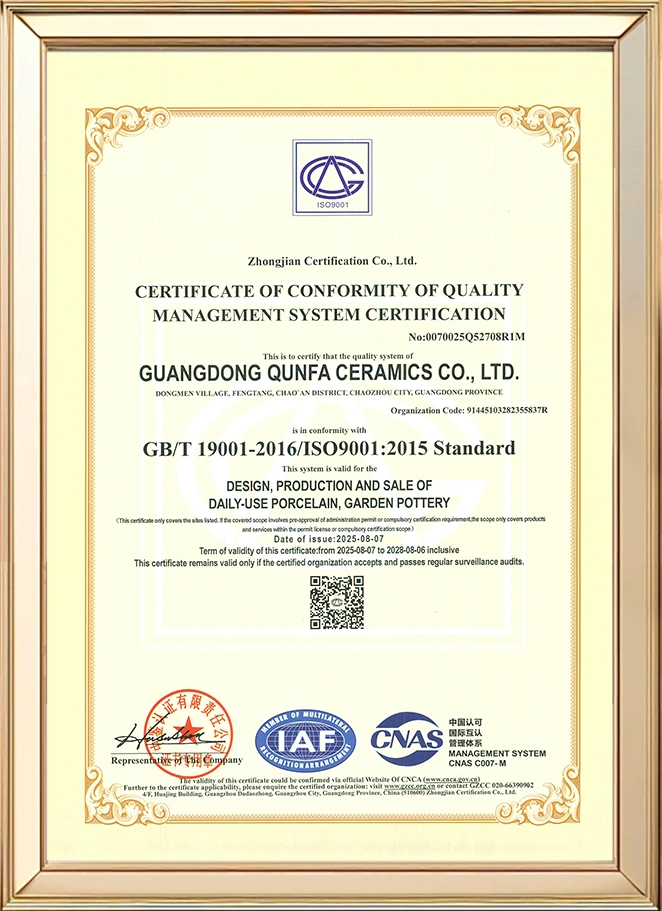
Diese Standards bilden jedoch lediglich die Grundlage.
Unser echtes Qualitätsmanagement hängt von einem internen System zur Abnahme des Produkterscheinungsbildes, das im Laufe jahrzehntelanger Produktionserfahrung kontinuierlich weiterentwickelt wurde. Dieses Dokument ist wesentlich detaillierter als die nationalen Normen und dient als Betriebsanleitung, die von jeder Produktionsabteilung und jedem Qualitätsprüfer verwendet wird.
Die Produkte werden nach ihrem maximalen Durchmesser oder ihrer maximalen Höhe klassifiziert:
- Klein: <120 mm
- Medium: 121–280 mm
- Groß: 281–360 mm
- Extra groß: ≥ 361 mm
Streifenförmige Produkte werden anhand des Durchschnittswerts aus Länge und Breite klassifiziert.
Jede Maßtoleranz, jeder optische Mangel, jede Prüfmethode und jede Abnahmegrenze ist eindeutig durch numerische Werte definiert – und nicht durch subjektive Beurteilung.
Die Qualitätskontrolle bei Keramik beginnt mit der Maßhaltigkeit und der Funktionsgenauigkeit
Die Maßhaltigkeit ist einer der ersten Faktoren, die Käufer bei der Annahme von Keramikprodukten prüfen.
Unsere Abnahmestandards legen strenge Fertigungstoleranzen fest:
| Prüfpunkt | Abnahmestandard |
|---|---|
| Durchmesser | ±3% |
| Höhe | ±3% |
| Gewicht (Hohlformung) | ±10% |
| Gewicht (Hochdruckumformung) | ±8% |
| Gewicht (Walzformung) | ±5% |
Jede Produktionscharge wird einer Prüfung unterzogen 100% – Sichtprüfung nach dem Abfeuern.
Die Qualitätsprüfer vermessen die Produkte mit Präzisionsmessschiebern. Jedes Produkt, das die zulässige Toleranz überschreitet, wird entweder nachbearbeitet oder aussortiert.
Bei Produkten mit Deckel prüfen wir zudem den funktionalen Sitz:
- Der Abstand zum Deckel darf nicht größer sein als 3 mm
- Bei seitlicher Verschiebung darf kein sichtbarer Spalt zum Boden bestehen
- Teekannen-Deckel müssen fest sitzen, wenn die Kanne gekippt wird, um 70°
Es handelt sich hierbei um verbindliche Prüfvorschriften – nicht um freiwillige Qualitätskontrollen.
Bei kompletten Geschirrsets überprüfen die Prüfer außerdem:
- Farbkonsistenz
- Gleichmäßigkeit der Weißfärbung
- Ausrichtung der Verzierungen
- Korrekte Markierungen am Boden
- Deutliche Markenzeichen und Logos
Diese Details wirken sich unmittelbar auf den ersten Eindruck der Kunden und deren Wahrnehmung der Marke aus.
Qualitätskontrolle bei Keramikprodukten zur Prüfung des äußeren Erscheinungsbildes
Ein Aspekt, der Käufer aus dem Ausland oft überrascht, ist, wie detailliert die Sichtprüfung von Keramik tatsächlich ist.
Unser internes Abnahmehandbuch unterscheidet mehr als ein Dutzend Fehlerarten, darunter:
- Verformung
- Lochblenden
- Schlackeneinschluss
- Schwarze Flecken
- Tonrückstände
- Glasurblasen
- Glasurausfälle
- Schlagschäden
- Risse
- Tonmangel
- Abweichung von der Trennlinie
- Fehlausrichtung der Aufkleber
- Farbverfälschung
- Fehlende Verzierung
Für jeden Fehler gelten unterschiedliche Abnahmekriterien, abhängig von:
- Produktgröße
- Defektgröße
- Fehlerort
- Sichtbare oder nicht sichtbare Oberfläche
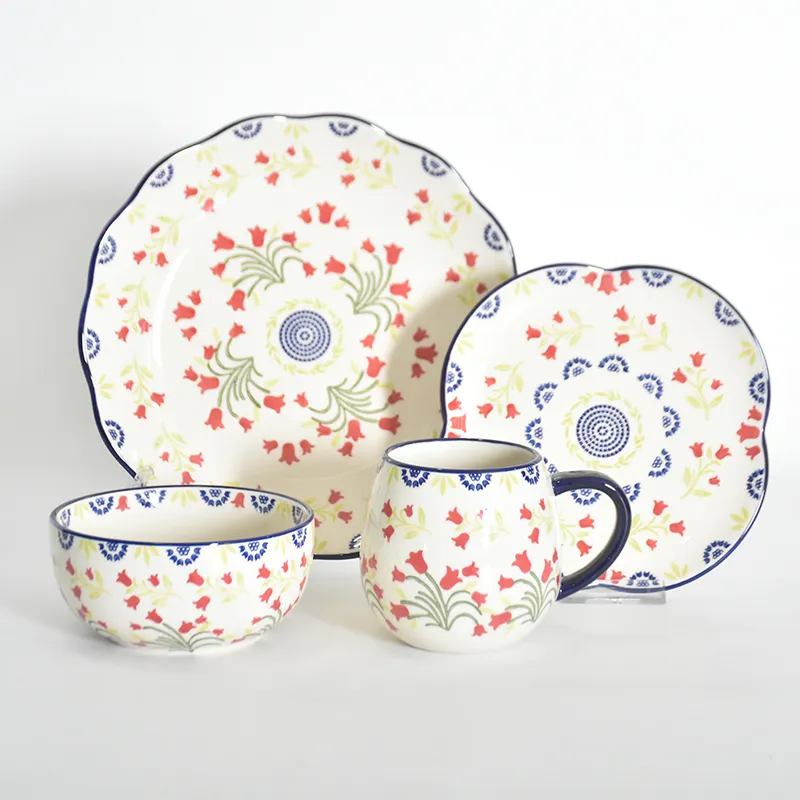
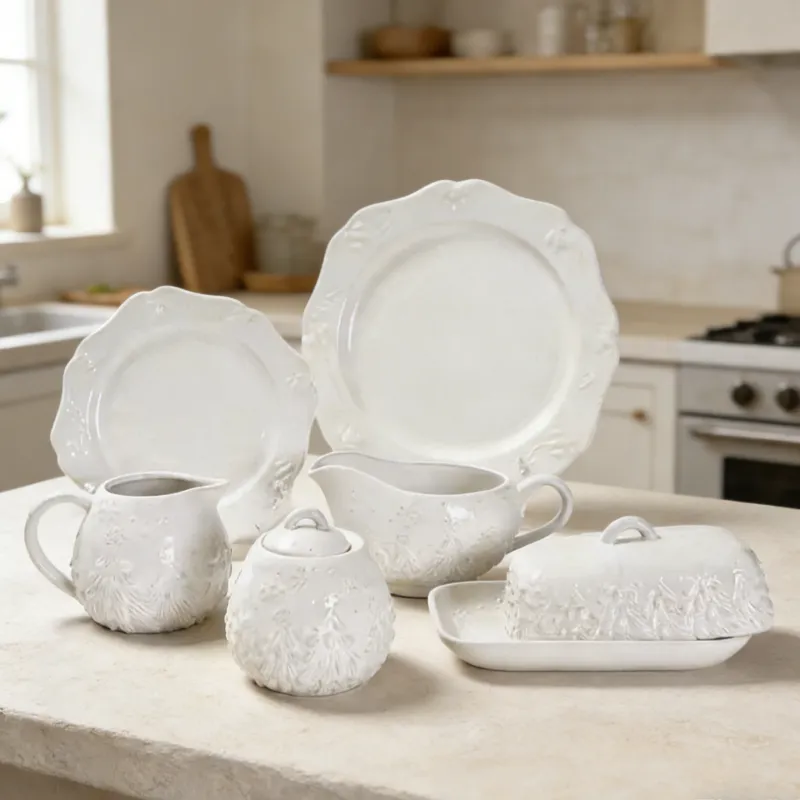
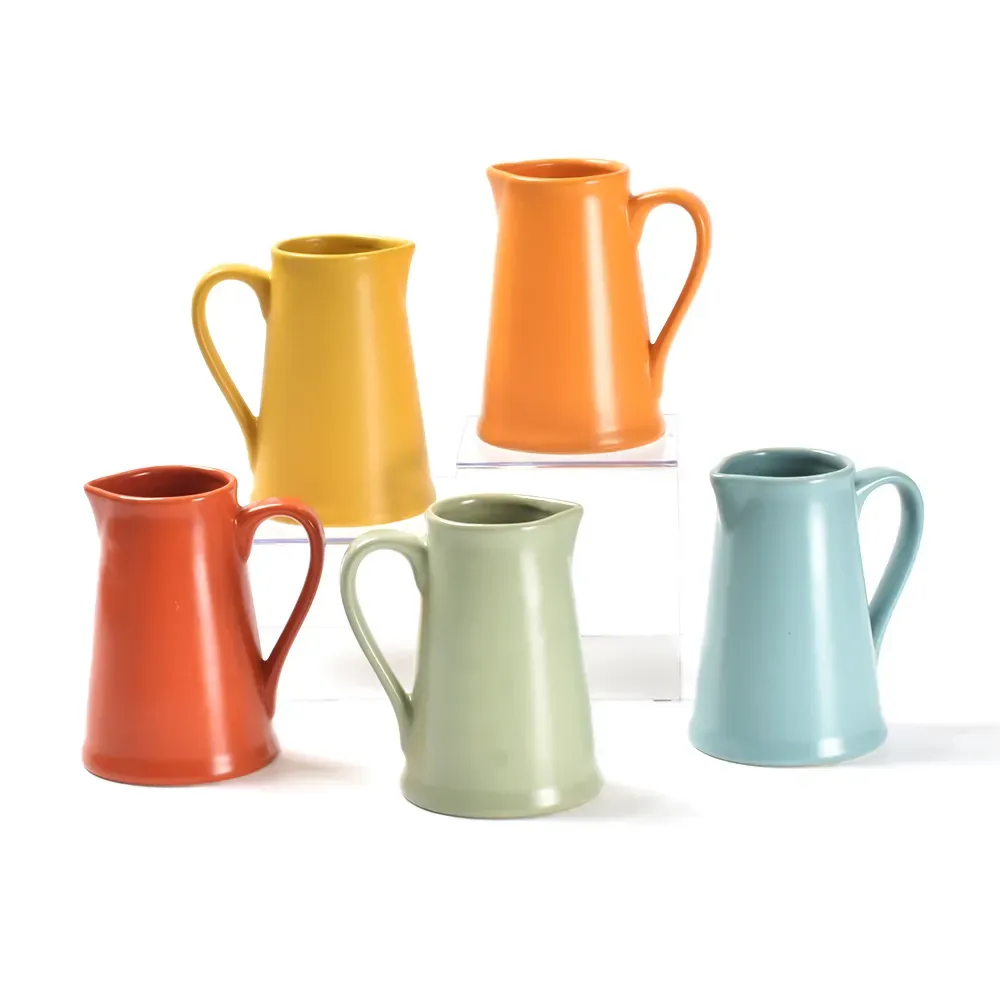
Typische Beispiele
Verformung
- Große Produkte: maximal ±3 mm
- Produkte mittlerer Größe: ±2,5 mm
- Kleine Produkte: ±2 mm
Alles, was diese Grenzwerte überschreitet, wird abgelehnt.
Lochblenden
- Große Produkte: maximal 3 (≤ 0,5 mm²)
- Produkte der Kategorie „Medium“: maximal 2
- Kleine Artikel: maximal 1
Ein freiliegender Keramikkörper ist unter keinen Umständen zulässig.
Schlackeneinschlüsse, Tonrückstände und Glasurbläschen
Sichtbare Oberflächen:
Nicht zulässig.
Nicht sichtbare Oberflächen:
Nur nach dem Anziehen und nur innerhalb strenger Mengen- und Größenbeschränkungen erlaubt.
Risse, Abplatzungen und Tonmangel
Sichtbare Oberflächen:
Nulltoleranz.
Unterseite:
Ein kleiner Defekt, bei dem der Keramikkörper nicht freiliegt, kann akzeptiert werden.
Jeder freiliegende Körperteil führt zur Ablehnung.
Dekorationsfehler
Formnähte, übermäßige Verzierungen und Fehlausrichtungen von Aufklebern sind auf sichtbaren Oberflächen nicht zulässig.
Geringfügige Mängel an nicht sichtbaren Stellen dürfen nur akzeptiert werden, wenn sie optisch nicht erkennbar sind.
Diese Unterscheidung zwischen sichtbaren und verdeckten Oberflächen ermöglicht es uns, ein hochwertiges Produktdesign zu gewährleisten und gleichzeitig unnötigen Ausschuss während der Produktion zu minimieren.
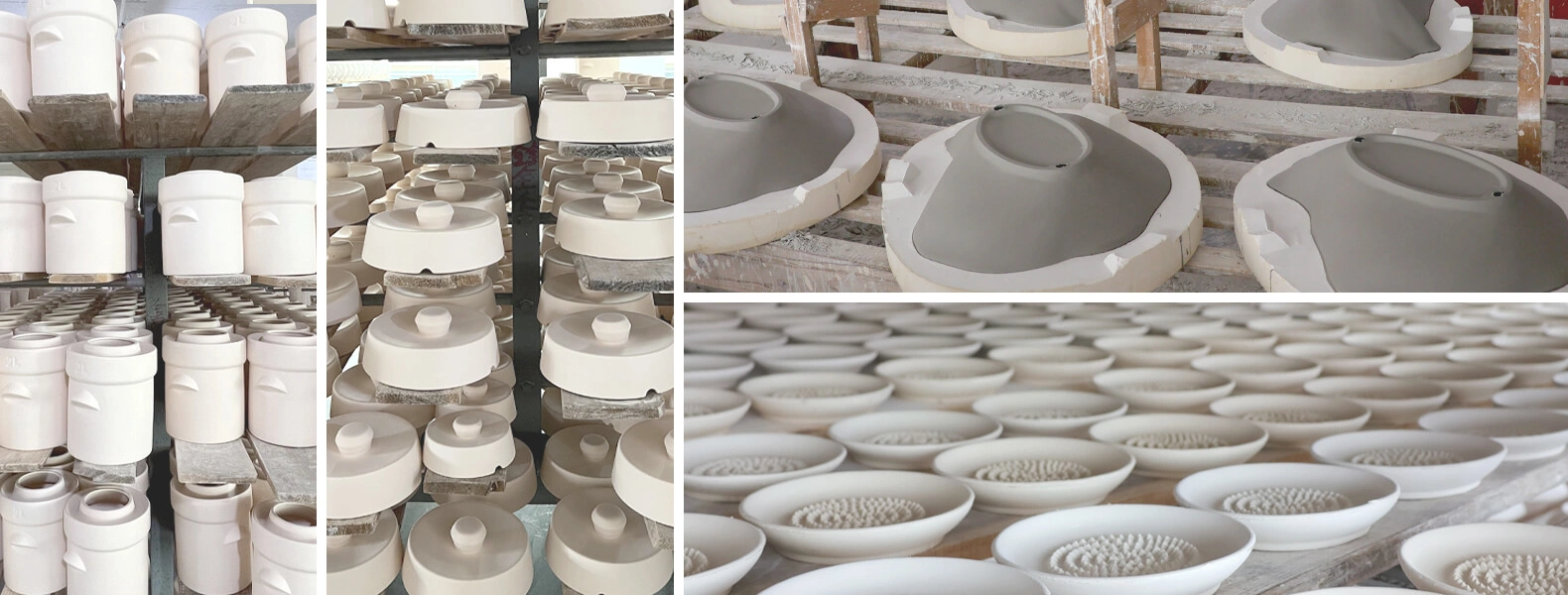
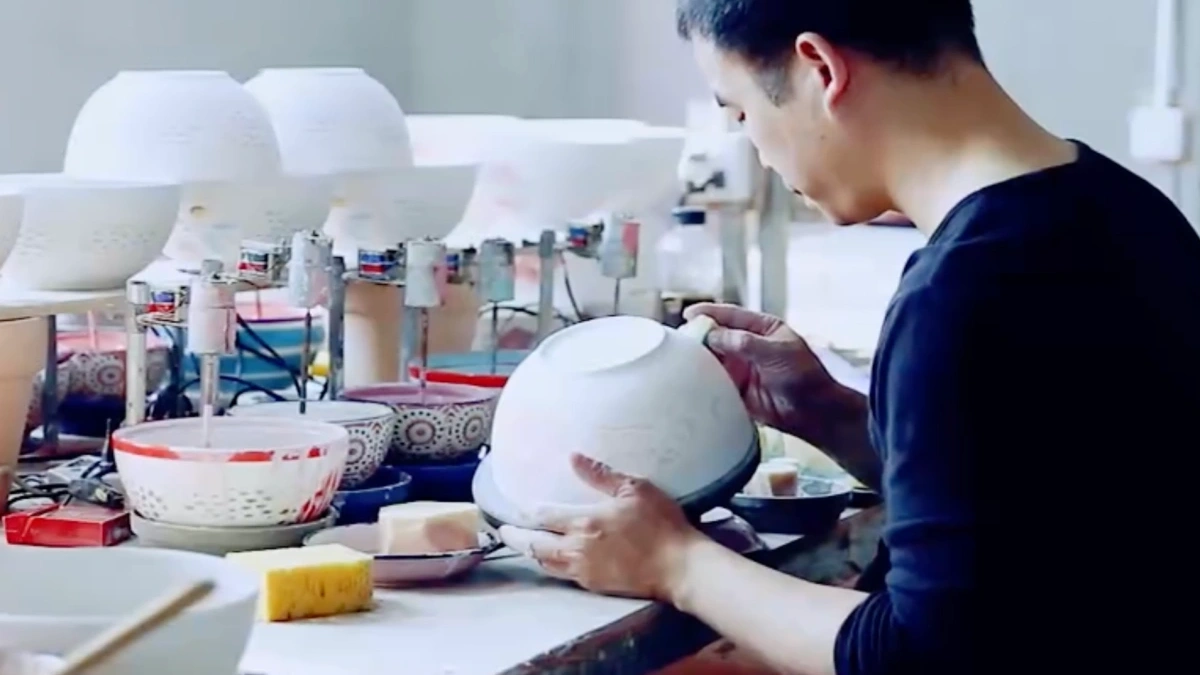
Die Produktbewertung basiert auf objektiven Standards
Unser Qualitätskontrolle bei Keramik Die Normen legen klare Bewertungsregeln fest, die auf messbaren Prüfergebnissen statt auf subjektiven Einschätzungen basieren.
Ein zulässiges Produkt darf enthalten höchstens ein kleiner Mangel, sofern keine besonderen Kundenanforderungen genehmigt wurden.
Produkte werden sofort aussortiert, wenn sie Folgendes enthalten:
- Erhebliche Mängel
- Funktionsstörungen
- Risse
- Gesichtsfehlbildungen bei menschlichen oder tierischen Figuren
- Deutliche Farbunterschiede
- Unzureichender Glanz
- Weißgrad unterhalb der zugelassenen Normen
Anstatt sich allein auf die Erfahrung der Bediener zu verlassen, vergleichen die Prüfer die Produkte mit zugelassenen Referenzproben und setzen bei Bedarf Messgeräte ein.
Fundierte Entscheidungen basieren auf Daten – nicht auf Meinungen.
Signierte Produktionsmuster gewährleisten die Konsistenz der Charge
Eines der wichtigsten Verfahren in unserer Qualitätskontrolle bei Keramik Das System dient der Freigabe von Produktionsmustern.
Bevor die Serienproduktion beginnt:
- In der Produktion werden Formmuster hergestellt.
- Der Vertrieb bestätigt die Ausstattung und die Farbe.
- Vom Kunden freigegebene Muster werden unterzeichnet.
Anschließend werden drei identische, zugelassene Proben verteilt:
- Produktionsabteilung
- Abteilung für Verglasung
- Abteilung für Qualitätskontrolle
Jede Probe enthält folgende eindeutige Angaben:
- Kundenname
- Bestellung
- Artikelnummer
Diese signierten Muster werden zum offiziellen Produktionsstandard.
Bei jeder Qualitätskontrolle während der Produktion werden die fertigen Produkte direkt mit diesen freigegebenen Referenzmustern verglichen.
Ohne freigegebene Muster wird die Produktion nicht aufgenommen.
Qualitätskontrolle bei Keramikprodukten während des gesamten Herstellungsprozesses
Qualität lässt sich nicht allein durch die Endkontrolle gewährleisten.
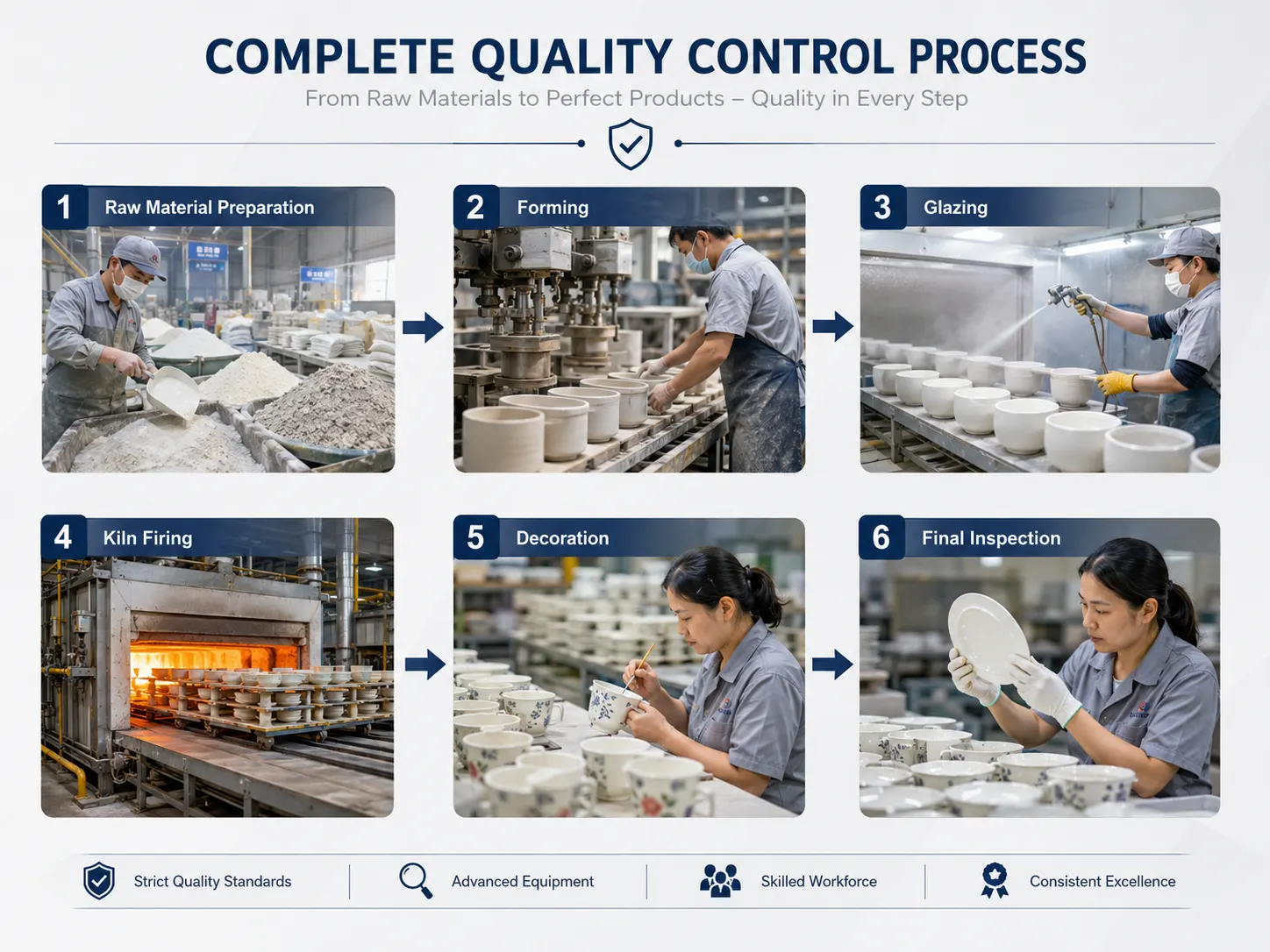
Stall Qualitätskontrolle bei Keramik Das hängt davon ab, dass jede Fertigungsstufe kontrolliert wird.
Unser Prüfsystem umfasst:
Rohstoffe
- Plastizität von Ton
- Schrumpfungsrate
- Viskosität der Glasur
- Fließverhalten der Glasur
Formung
- Formgenauigkeit
- Prüfung auf Verformungen
Verglasung
- Glasurdicke
- Flächenabdeckung
Dekoration
- Ausrichtung der Aufkleber
- Farbkonsistenz
Endabnahme
Jedes gebrannte Produkt wird einer Prüfung unterzogen Manuelle Prüfung 100% die sowohl das innere als auch das äußere Erscheinungsbild abdeckt.
Werden ungewöhnlich hohe Fehlerquoten festgestellt, wird die gesamte Produktionscharge aussortiert und erneut geprüft.
Immer wenn wir Folgendes einführen:
- Neue Produkte
- Neue Produktionsverfahren
- Umfangreiche Wartungsarbeiten am Brennofen
Vor der Wiederaufnahme der Produktion werden die vollständigen Qualifizierungstests wiederholt.
Warum die Qualitätskontrolle bei Keramikprodukten für OEM-Einkäufer wichtig ist
Ein reifer Qualitätskontrolle bei Keramik Das System hilft OEM-Einkäufern dabei, Fehler zu reduzieren, die Konsistenz zu verbessern und die Kosten im Kundendienst zu senken.
Ein reifer Qualitätsmanagementsystem für Keramik trägt dazu bei, dass:
- Konstante Produktabmessungen bei Nachbestellungen
- Einheitliches Erscheinungsbild von Dekor und Glasur
- Geringere Fehlerquoten
- Einfachere Qualitätsprüfungen vor dem Versand
- Geringere Kundendienstkosten
- Höhere Kundenzufriedenheit
Zuverlässige Qualität ist kein Glücksfall – sie beruht auf wiederholbaren Systemen, die auf messbaren Standards basieren.
Häufig gestellte Fragen
Warum sind Qualitätsstandards für Keramik für B2B-Einkäufer wichtig?
Qualitätsstandards stellen sicher, dass jede Produktionscharge denselben Spezifikationen entspricht, wodurch Mängel, Rücksendungen und Abweichungen reduziert werden, die sich auf den Einzelhandelsverkauf oder Eigenmarken auswirken können.
Was ist der Unterschied zwischen einer sichtbaren und einer nicht sichtbaren Oberflächenprüfung?
Sichtbare Oberflächen müssen wesentlich strengere Anforderungen an das Erscheinungsbild erfüllen, da sie das Kundenerlebnis unmittelbar beeinflussen. An verdeckten Stellen sind geringfügige optische Mängel zulässig, sofern sie weder die Funktion noch die Sicherheit beeinträchtigen.
Warum sind signierte Produktionsmuster erforderlich?
Die freigegebenen Muster dienen als offizielle Referenz für die Produktion und Prüfung und stellen sicher, dass alle Abteilungen nach denselben Standards hinsichtlich Farbe, Form und Aussehen produzieren.
Kann Qunfa OEM- und ODM-Projekte im Bereich Keramik unterstützen?
Auf jeden Fall. Wir bieten individuelle Farben, Logos, Verpackungen, Oberflächengestaltung und Produktentwicklung an und gewährleisten dabei eine strenge Qualitätskontrolle während des gesamten Herstellungsprozesses.
Arbeiten Sie mit Qunfa Ceramics zusammen – für eine zuverlässige OEM-Keramikfertigung
Da 1993, Qunfa Keramik hat sich auf die Entwicklung und Herstellung von Keramik für den täglichen Gebrauch, mittlere Brenntemperatur für globale Marken, Einzelhändler, Großhändler und Importeure. Wir produzieren in einer 30.000 m² großen Produktionsstätte mit mehr als 400 qualifizierte Mitarbeiter, bieten wir flexible OEM-/ODM-Dienstleistungen, fortschrittliche Fertigungstechnologie und ein strenges Qualitätsmanagementsystem, das auf jahrzehntelanger Fertigungserfahrung basiert.
Unser Sortiment umfasst Keramik-Backformen, Geschirr, Küchenutensilien, Futternäpfe für Haustiere und Pflanzkübel für den Garten, und bedienen Kunden weltweit. Als zuverlässiger Produktionspartner für international bekannte Einzelhändler wie Walmart, Costco, Aldi, Disney, C&B und Michaels wissen wir, dass gleichbleibende Qualität für den langfristigen Geschäftserfolg unerlässlich ist.
Wenn Sie auf der Suche nach einem Keramikhersteller sind, der kreative Produktentwicklung mit strenge Qualitätskontrollstandards für Keramik, würden wir uns freuen, Ihr nächstes Projekt mit Ihnen zu besprechen und Ihnen dabei zu helfen, zuverlässige, marktreife Keramikprodukte für Ihre Marke auf den Markt zu bringen.